
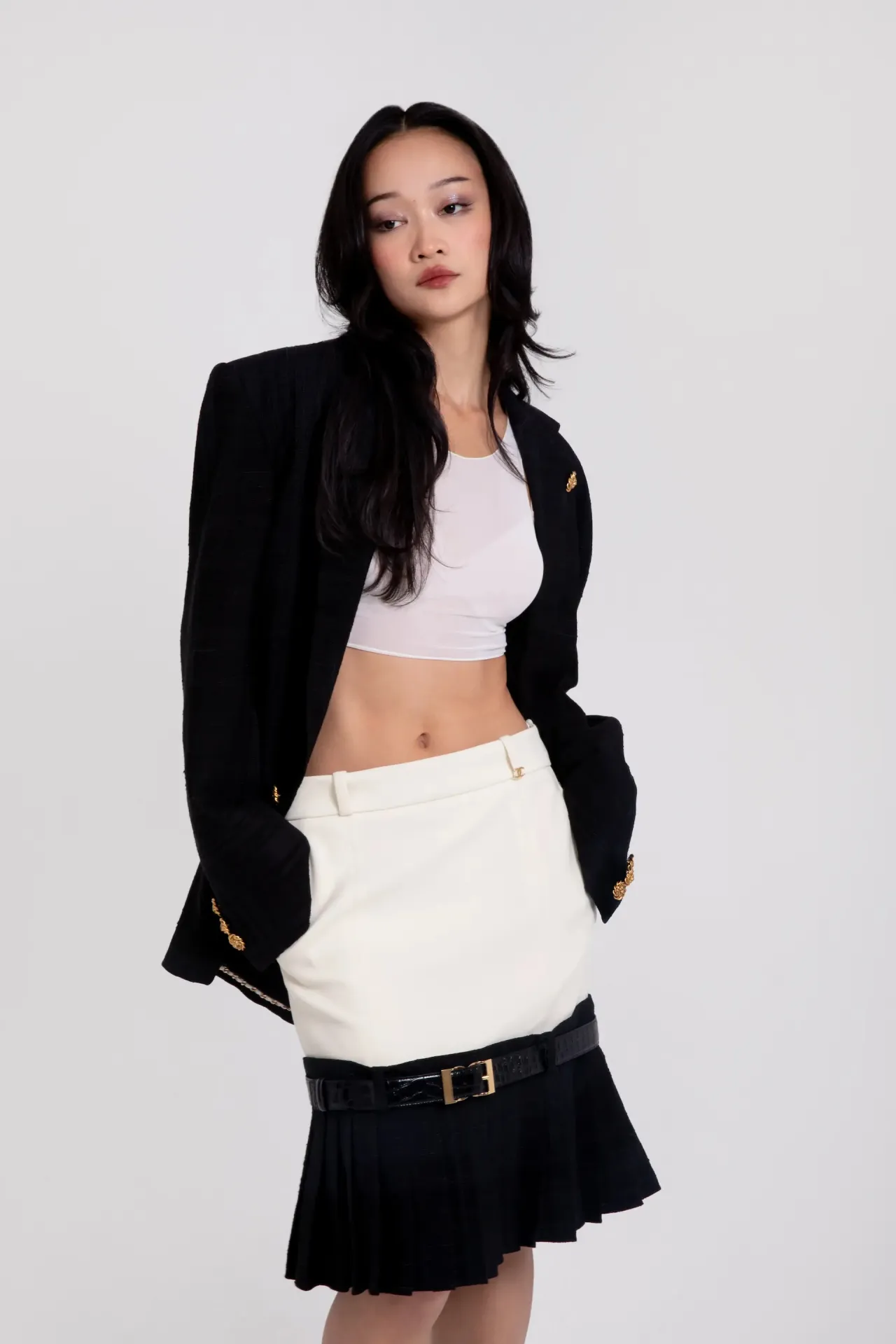
Callina Liang explores three contrasting looks for HUNGER Magazine, pairing cropped tailoring with pleated layers, electric-blue draping and an open white shirt with ornate gold accessories.
Callina Liang’s October 2026 editorial for HUNGER Magazine, photographed by Jemima Marriot, explores the space between tailored clothing and deliberately undone styling. Across three studio portraits, a black blazer sits above an unusually layered mini skirt, an electric-blue top is paired with black separates and sheer socks, and a white shirt hangs open over a structured white bra. The outfits share an interest in familiar wardrobe pieces worn in less conventional ways, although each approaches that idea through a different combination of proportions and exposed layers.
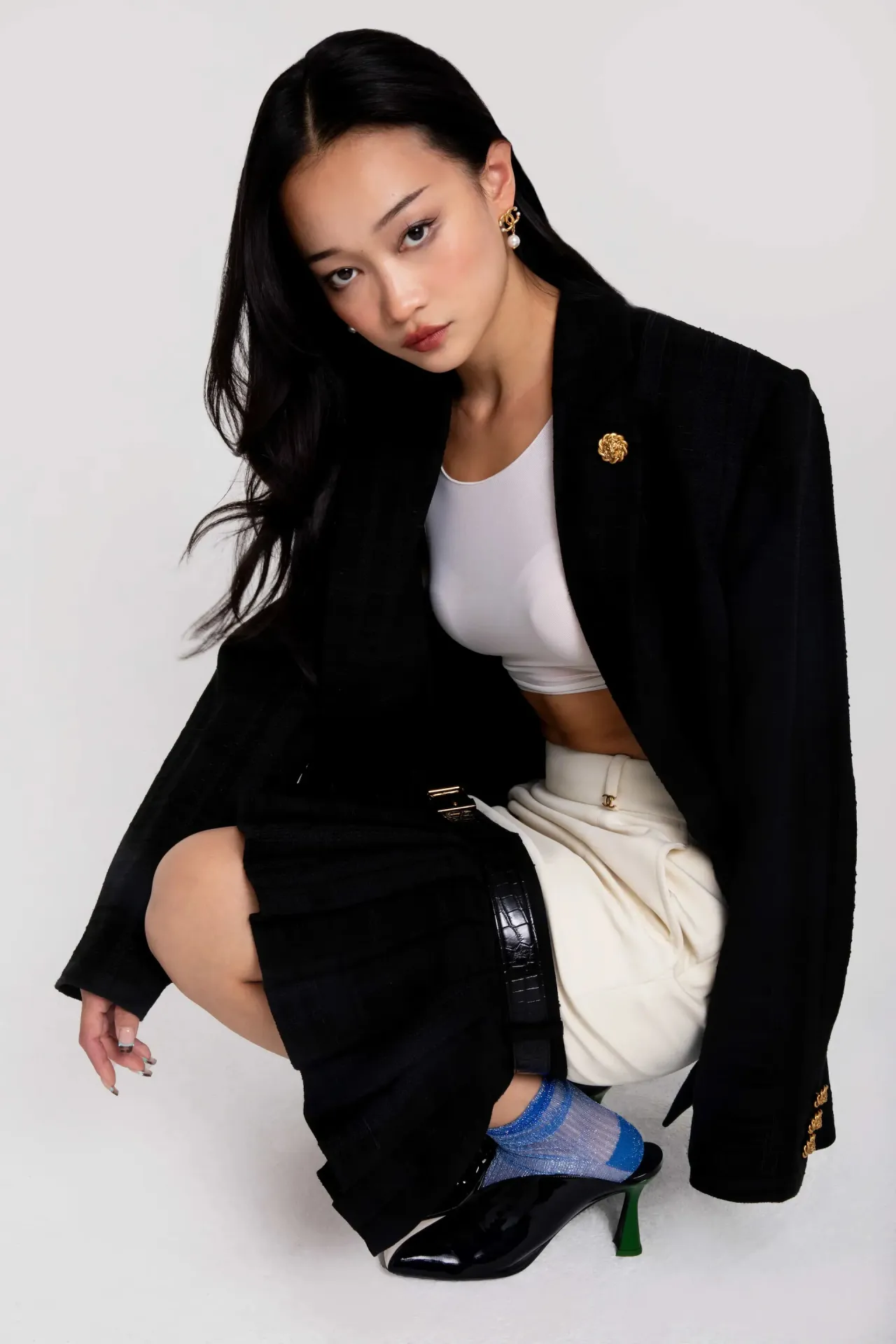
The black-and-white ensemble has the most complicated silhouette. Callina Liang’s black blazer and layered mini skirt combine a substantial tailored jacket with a fitted white cropped top and an unusual skirt construction. A smooth ivory panel wraps around the hips before meeting a narrow black belt, below which the skirt expands into short, sharply pleated tiers. The jacket’s pronounced shoulders and loose sleeves establish a strong upper shape, while the pleated hem introduces a distinctly school-uniform-inspired reference.
The outfit is visually interesting, but the middle section is busy. The cropped white top, exposed waist, pale upper skirt panel and black belt create several horizontal divisions before the pleats begin. Gold-toned buttons on the jacket and a matching belt buckle provide consistent metallic accents, although the layering has more competing elements than the silhouette needs. Its strongest feature is the contrast between the formal jacket and the abbreviated pleated skirt.
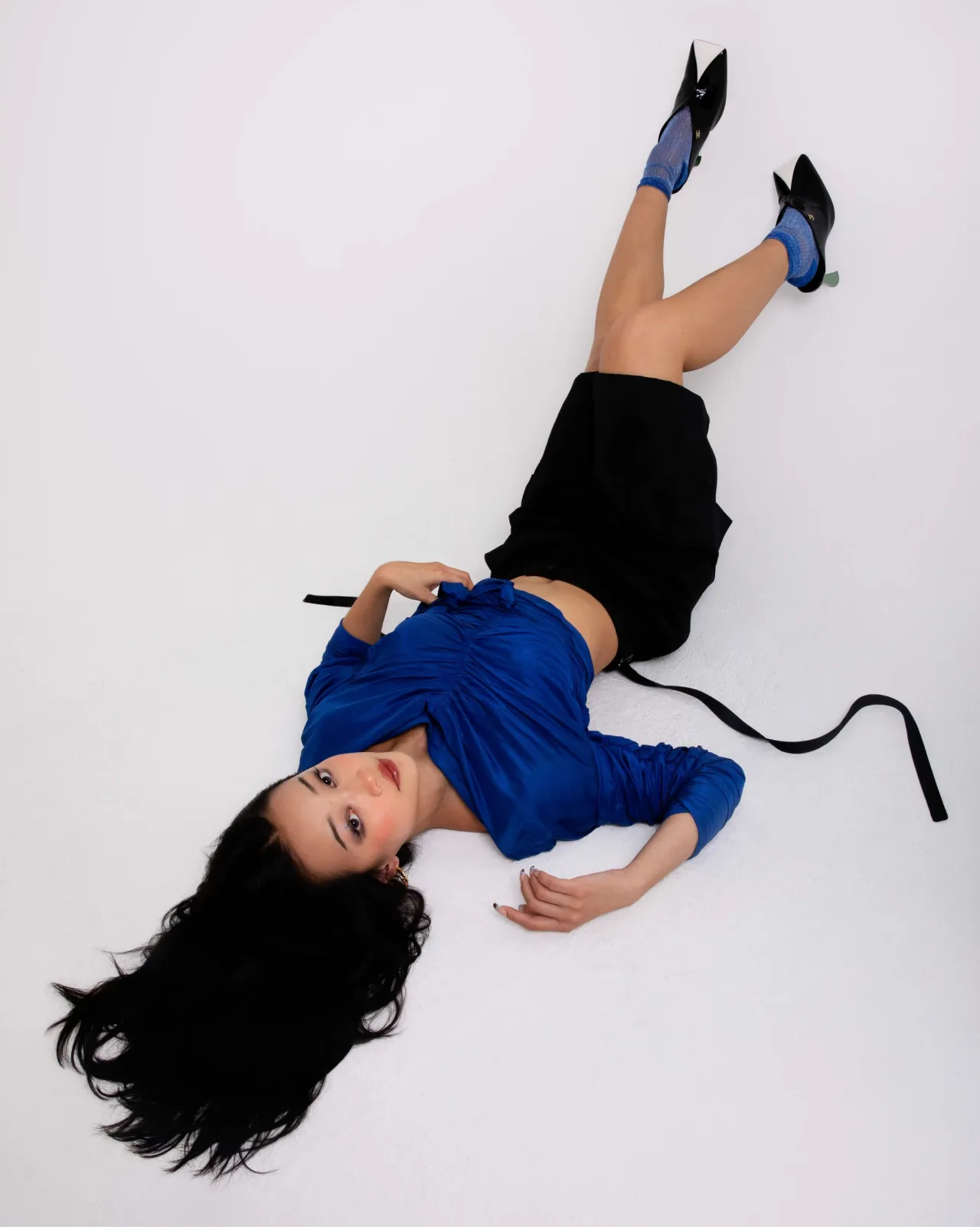
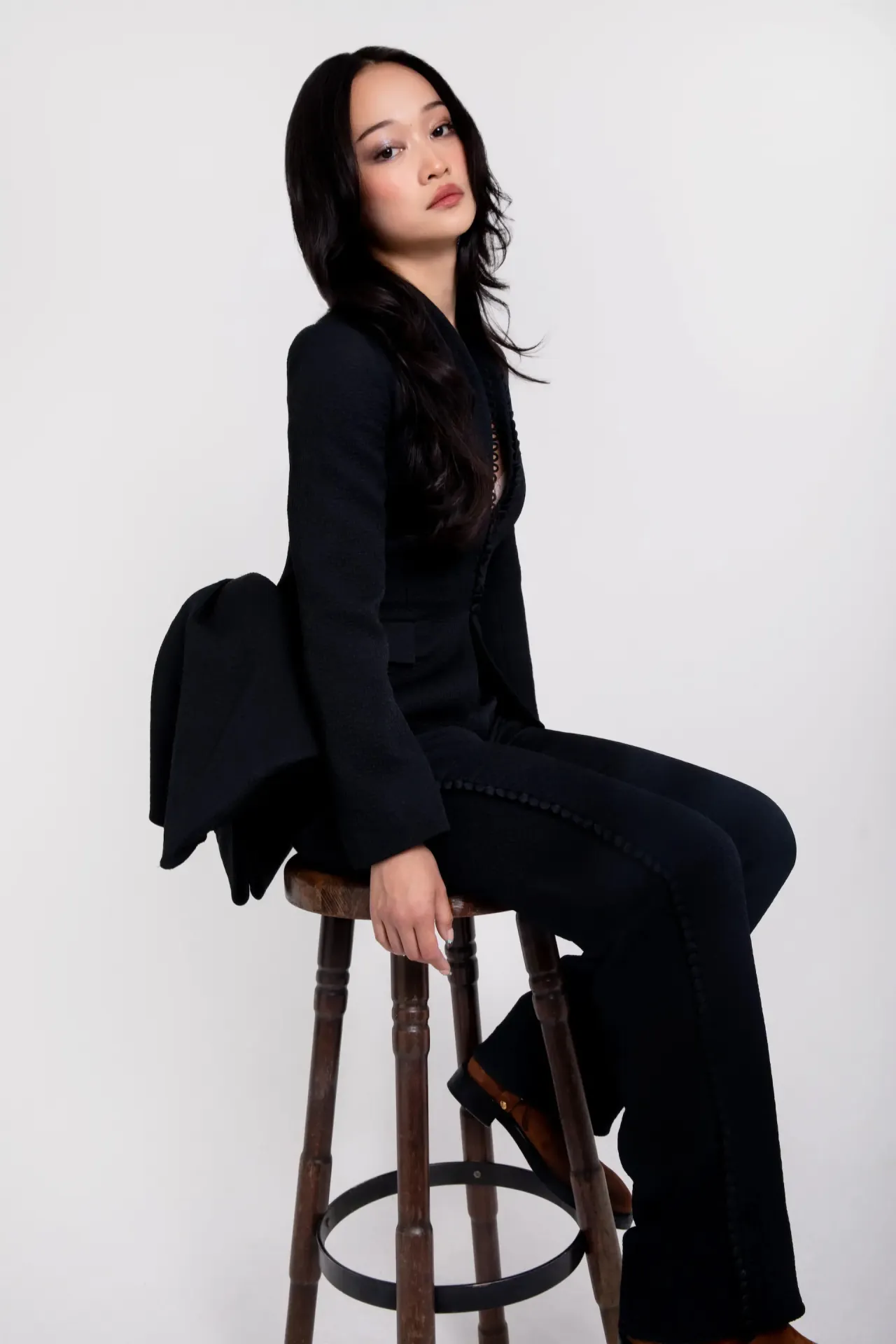
The second portrait is more direct. Liang reclines against a white studio surface wearing a vivid cobalt-blue long-sleeved top with concentrated gathering across the front and sleeves. The fabric forms irregular folds around the chest and waist, in contrast to a relatively plain black mini skirt. Sheer blue socks continue the color beneath her knees, while glossy black pointed shoes introduce small flashes of pale detailing at the toes.
Here, the photography has a particularly strong relationship with the clothing. Liang’s inverted pose, with both legs raised against the wall, turns the black skirt and blue top into opposing geometric shapes. The blue socks are an especially playful detail, providing a less expected extension of the top’s saturated color. The styling is less elaborate than the black-and-white ensemble, but its limited palette allows the gathered fabric to stand out.
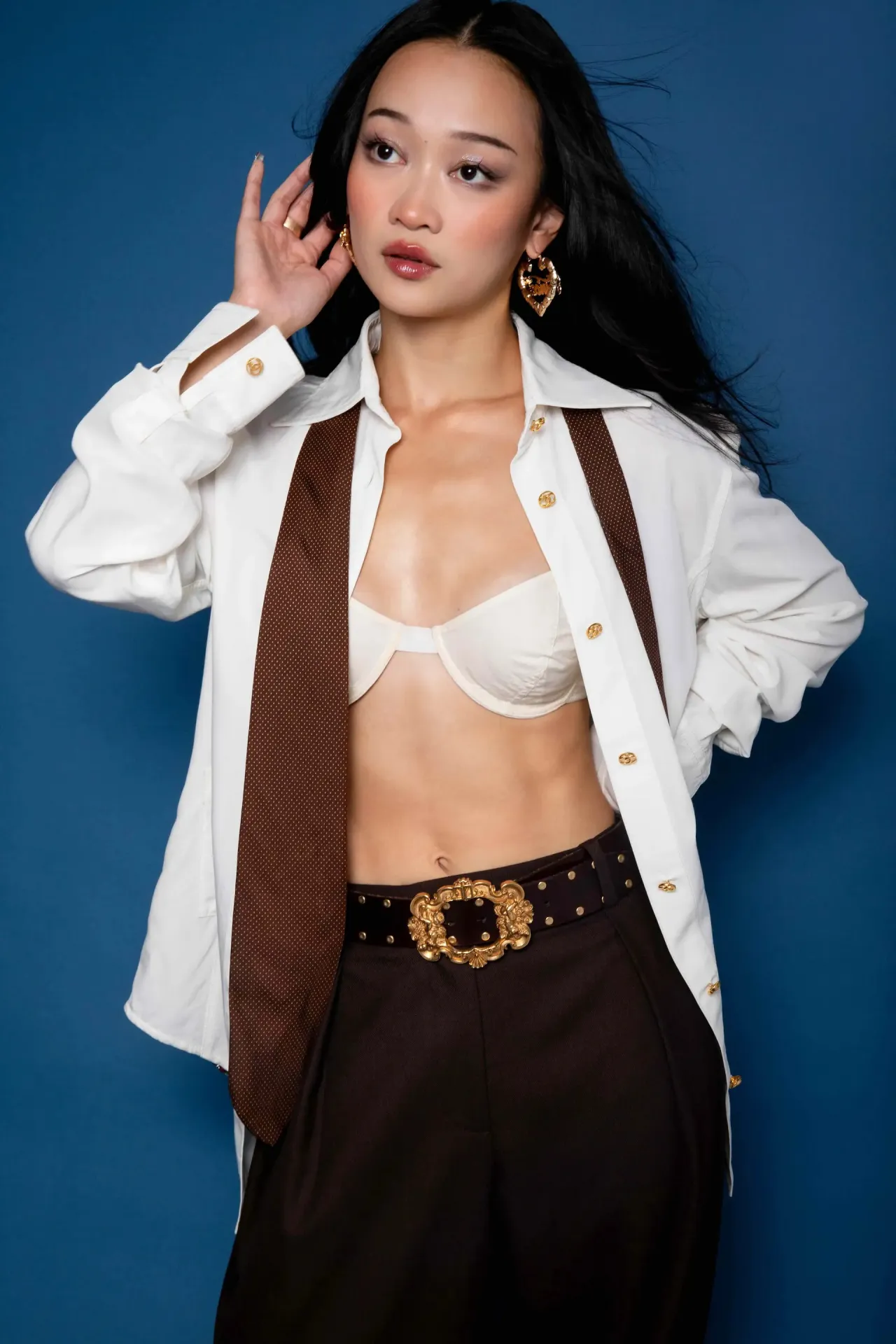
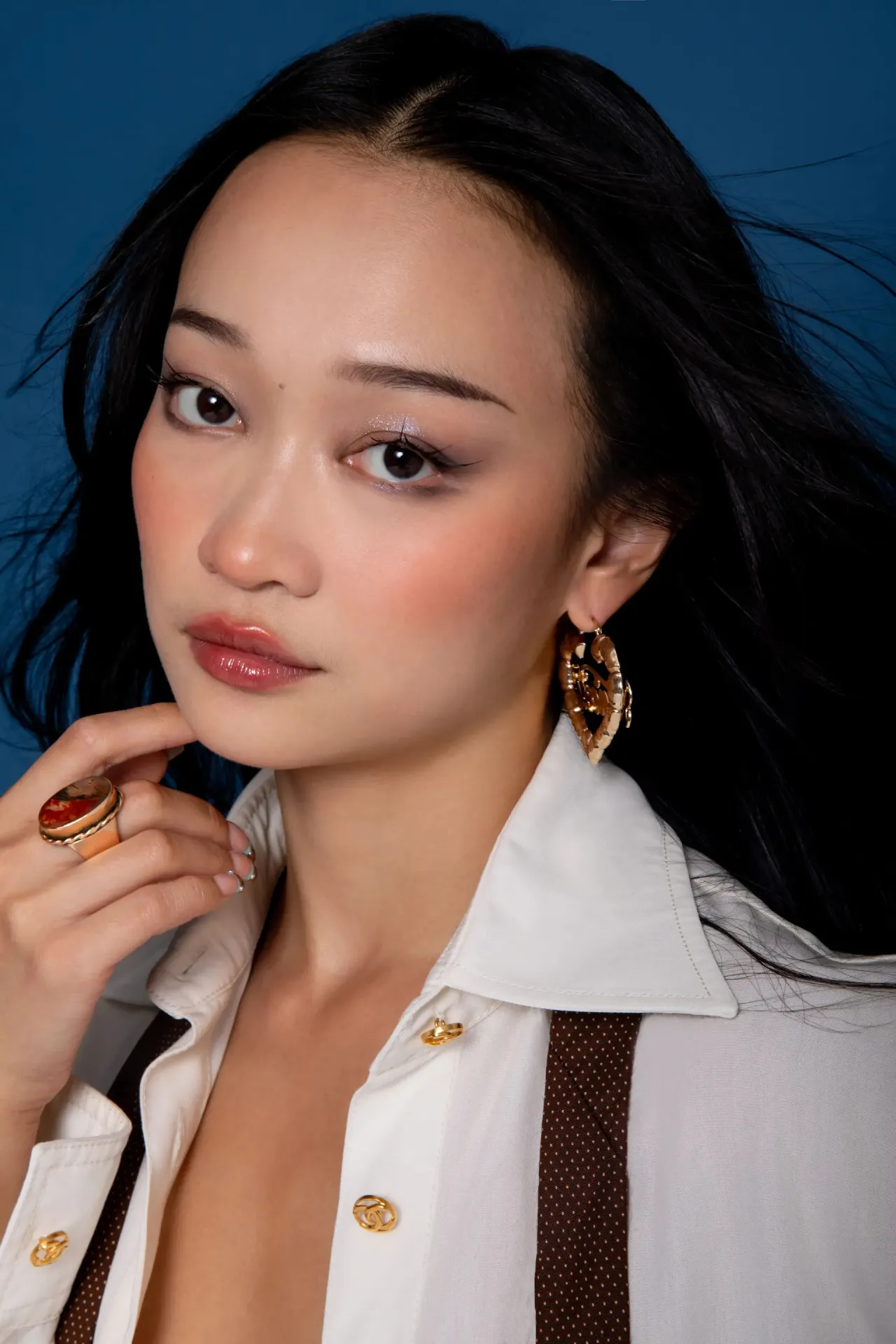
The third look is the most convincing example of relaxed tailoring. An open white button-down shirt with gold-toned buttons sits over a structured white bra, accompanied by dark brown trousers and a long, narrow brown tie. The shirt’s pointed collar and cuffs establish the language of traditional office dressing, but the open front and exposed waist disrupt that formality. An ornate gold buckle on the dark belt introduces a decorative focal point beneath the otherwise simple shirt.
The interplay between the tie and belt is particularly effective. Both accessories occupy prominent vertical and horizontal positions across the torso, with their dark brown surfaces connecting naturally to the trousers. Gold earrings and the shirt’s buttons repeat the buckle’s warm metallic finish. The contrast is controlled, and the tailoring has enough definition to remain distinctive without the additional volume seen in the first outfit.
The editorial offers a different approach from Callina Liang’s textured tweed and plush ivory outerwear for tmrw Magazine. That fashion series explores the relationship between enveloping volume and structured surfaces, while the HUNGER Magazine portraits concentrate on the placement of familiar garments, contrasting lengths and unconventional layering. The white-shirt combination is particularly persuasive because its pieces remain recognizable even as their arrangement challenges ordinary tailoring conventions.
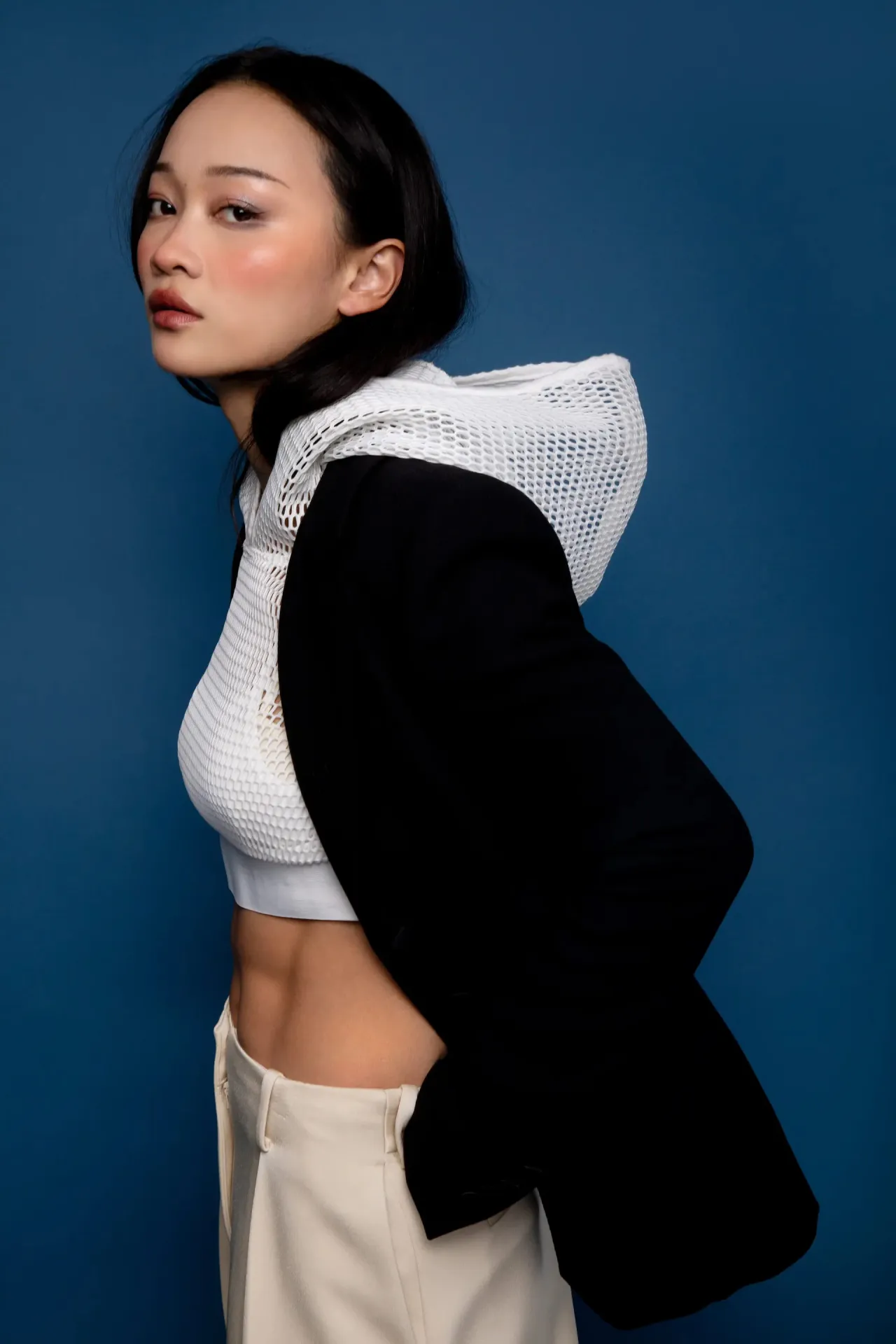
There is a consistent sense of experimentation across the three looks, but not every combination achieves the same clarity. The black blazer ensemble becomes slightly congested around the waist, while the cobalt outfit depends partly on the theatrical pose for its impact. The white shirt, tie and ornate belt offer the strongest independent styling proposition.
Liang’s HUNGER Magazine editorial receives 8/10 for its inventive treatment of tailored wardrobe pieces and the particularly cohesive white-shirt ensemble.




Share what you think