
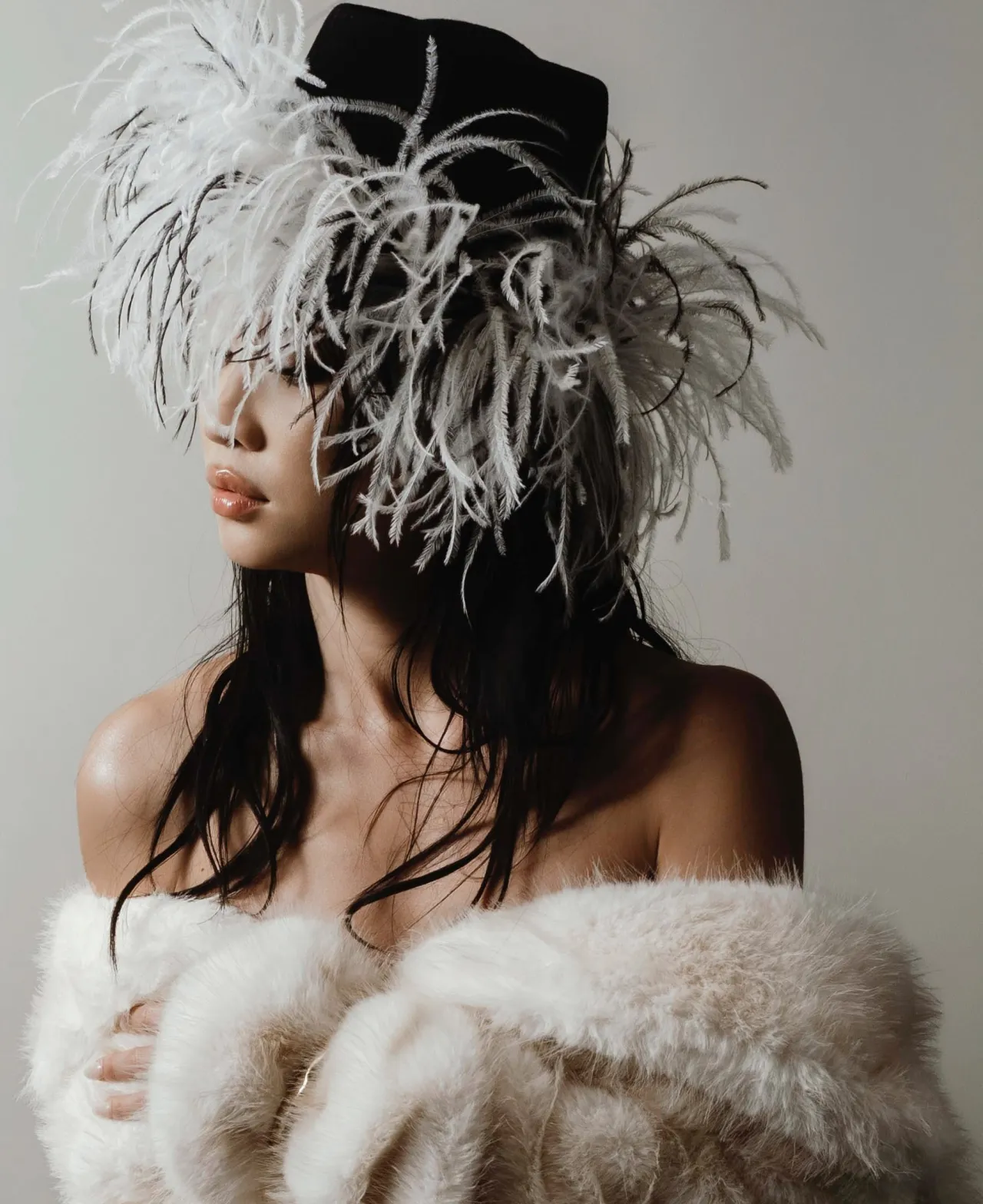
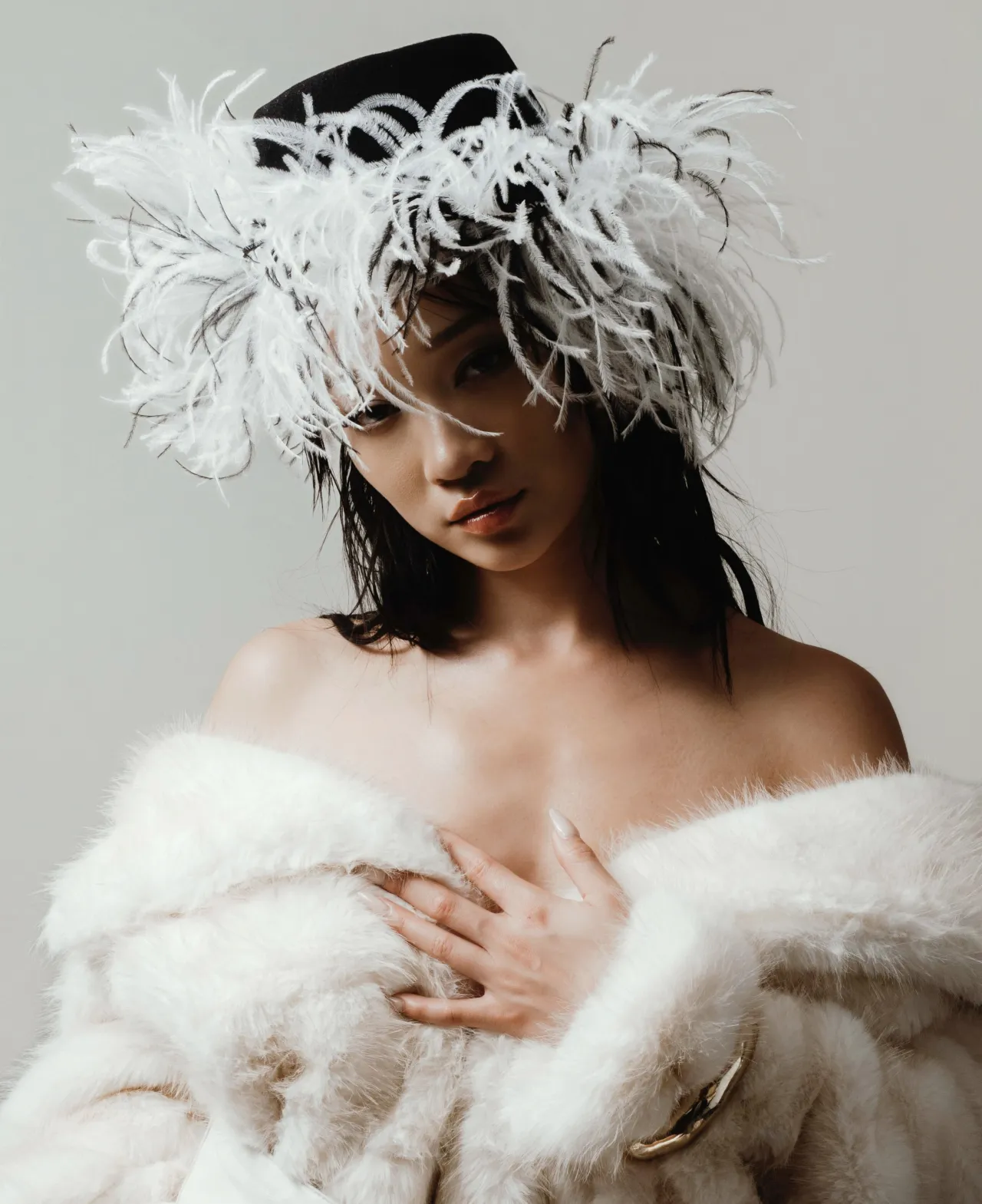
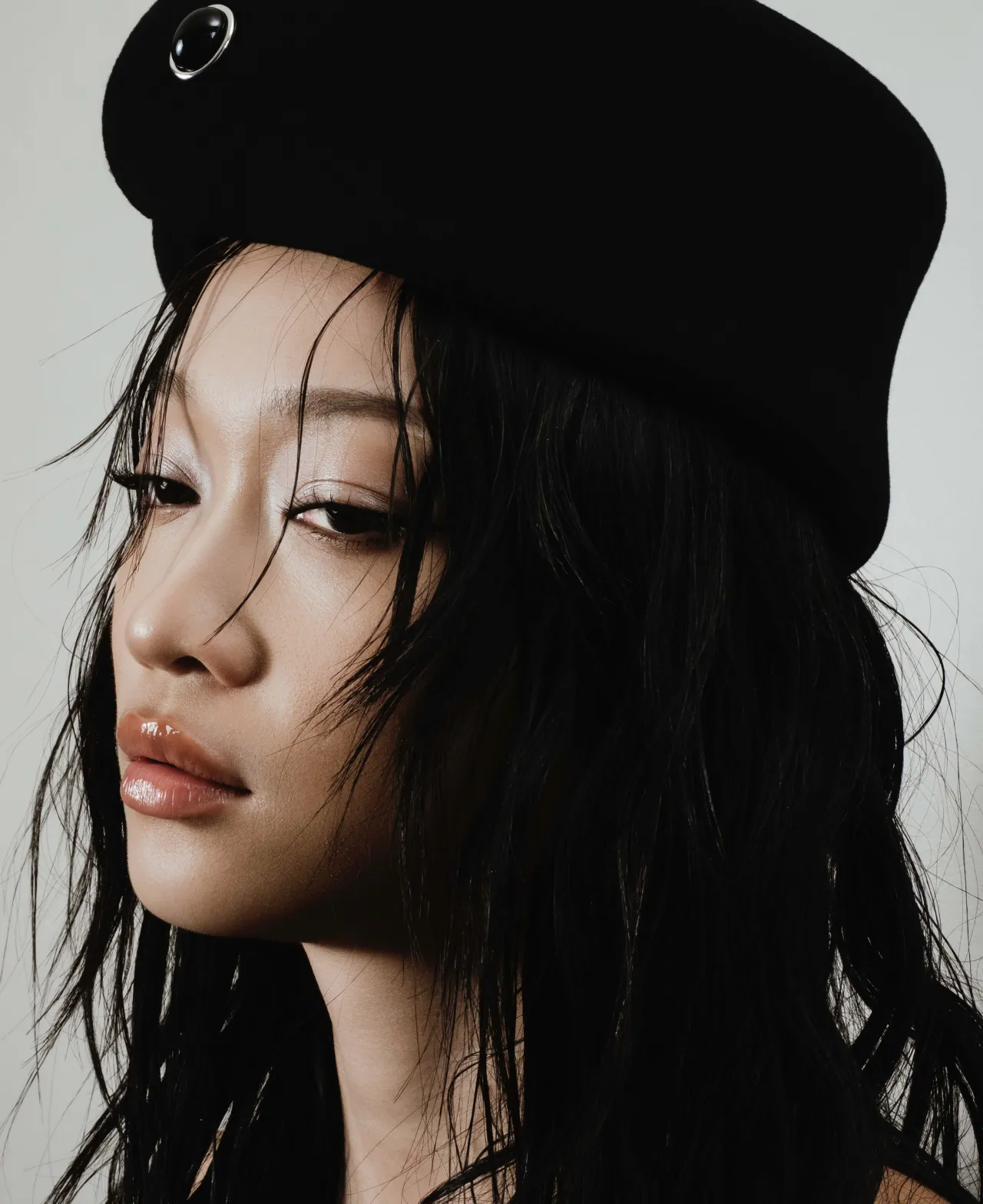
Callina Liang explores contrasting textures and silhouettes for tmrw Magazine, moving between plush ivory outerwear, sheer black styling, burgundy ruffles and sharply structured tweed.
Callina Liang explores four strikingly different approaches to fashion in Joa Frey’s October 2026 editorial for tmrw Magazine, from enveloping ivory outerwear to sharply structured black-and-white tweed. The photographs share a fascination with texture, but their silhouettes move between extremes. Plush fabric nearly surrounds Liang in one portrait; elsewhere, sheer knitwear exposes the outline beneath, a burgundy mini dress follows the contours of the body, and a high-necked tweed piece expands into angular layers. It is a varied editorial with a surprisingly consistent interest in how clothing changes the shape of the body.
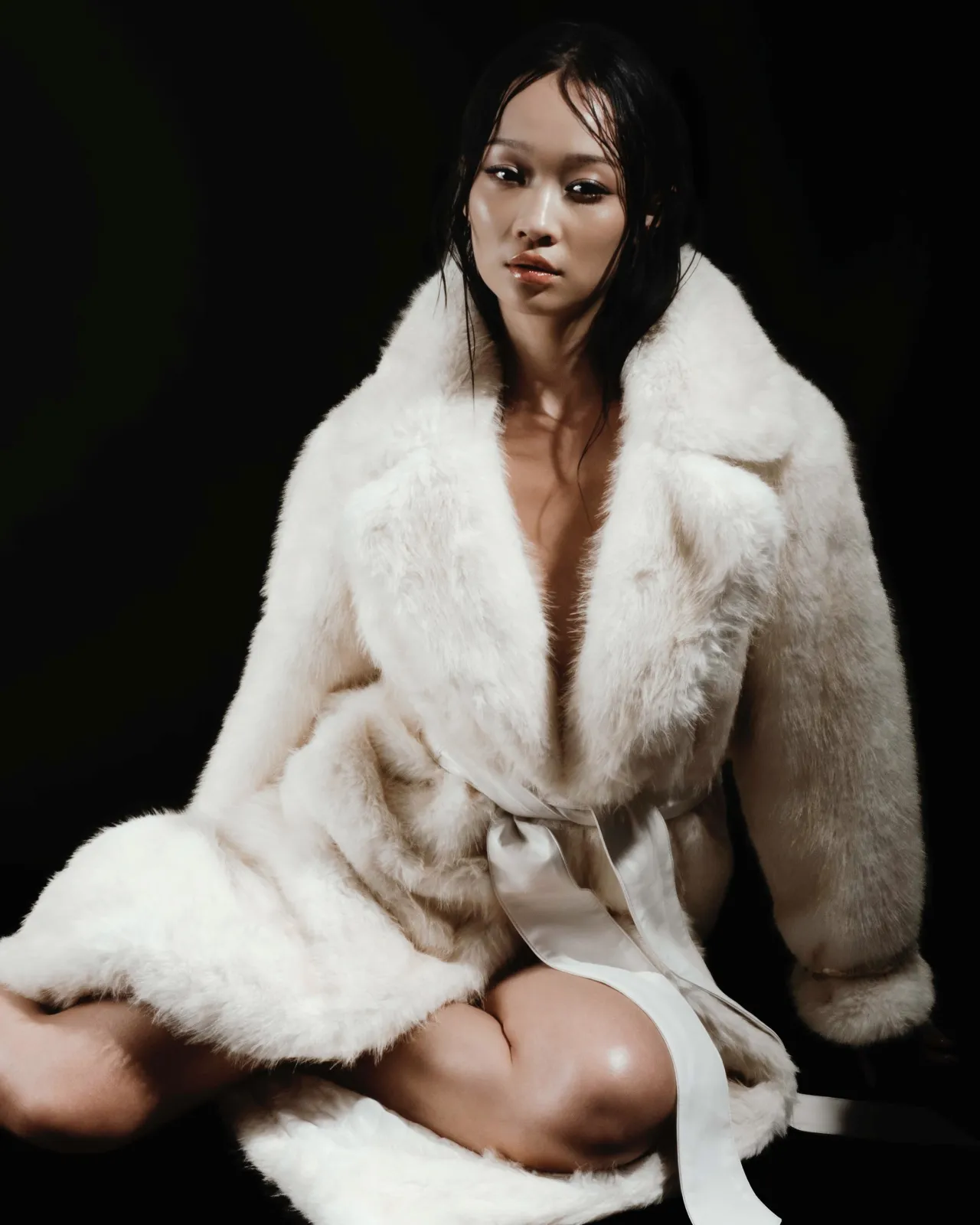
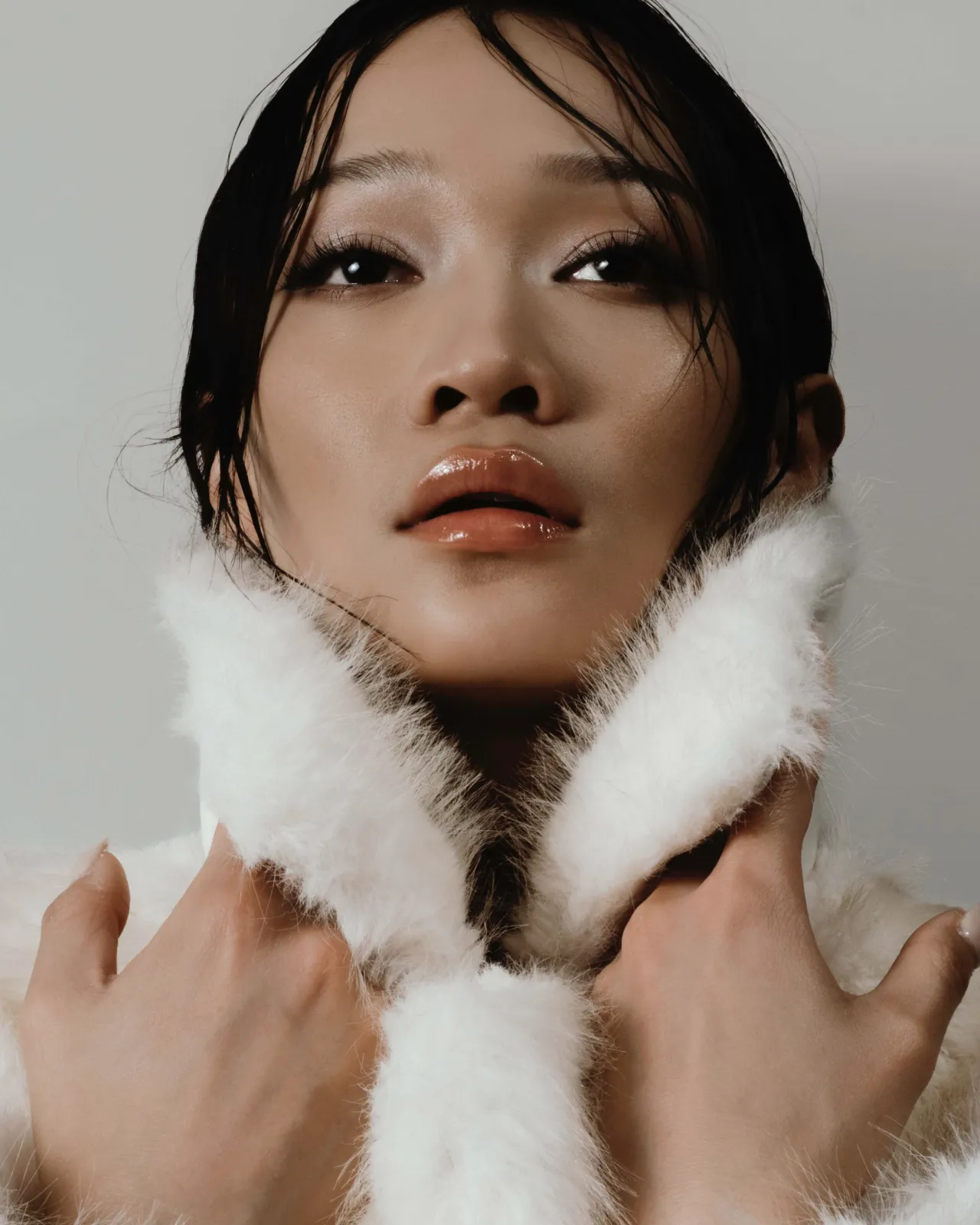
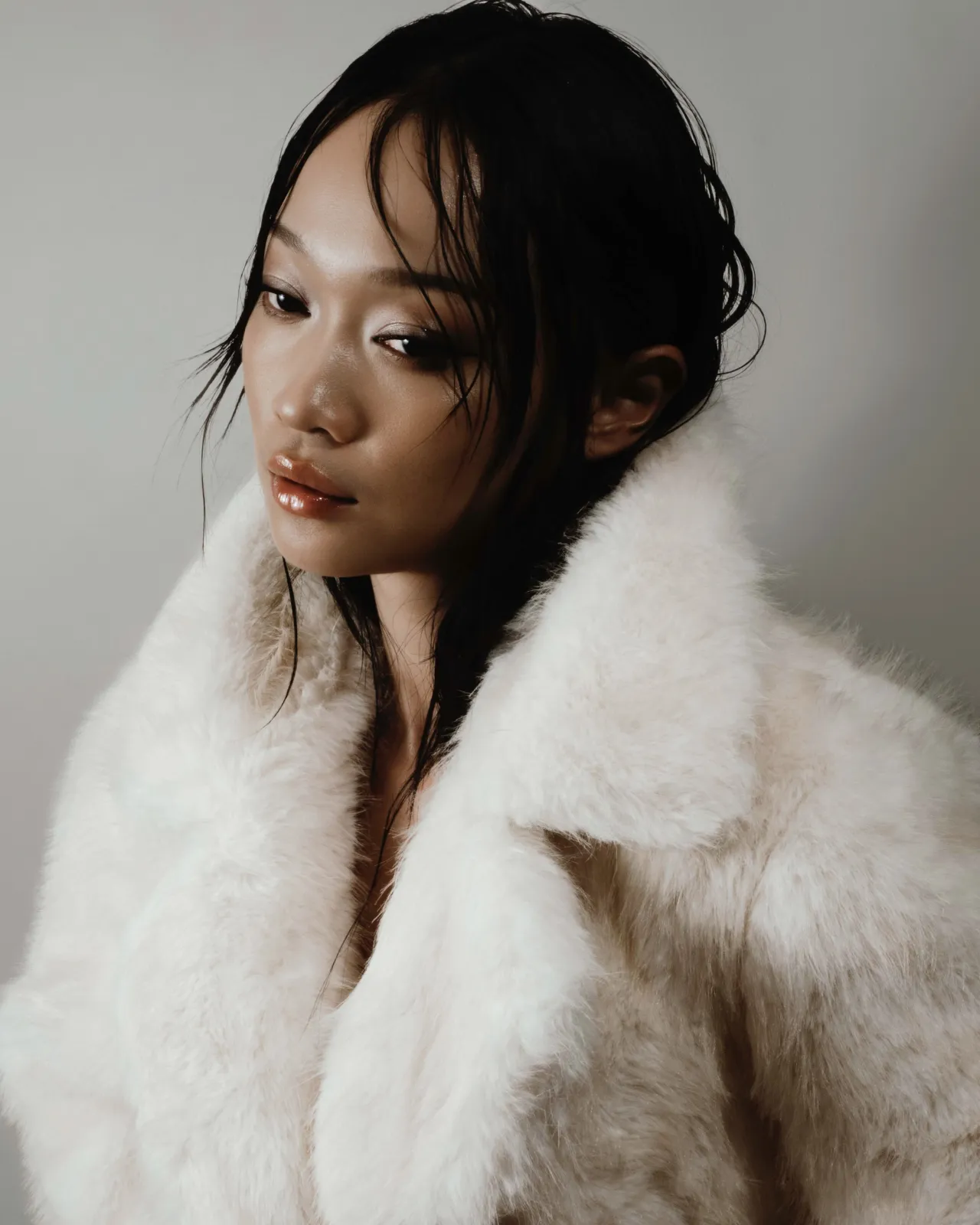
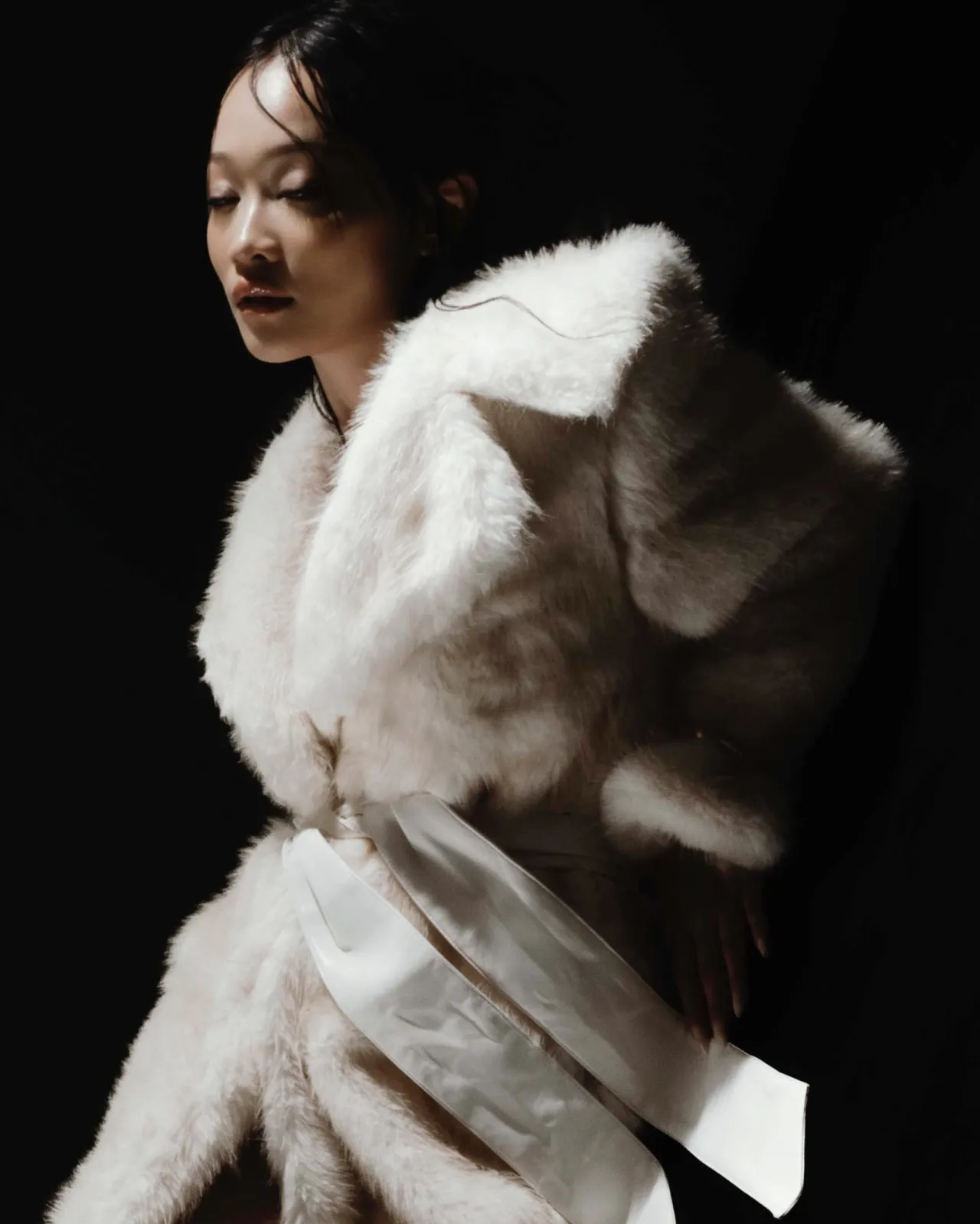
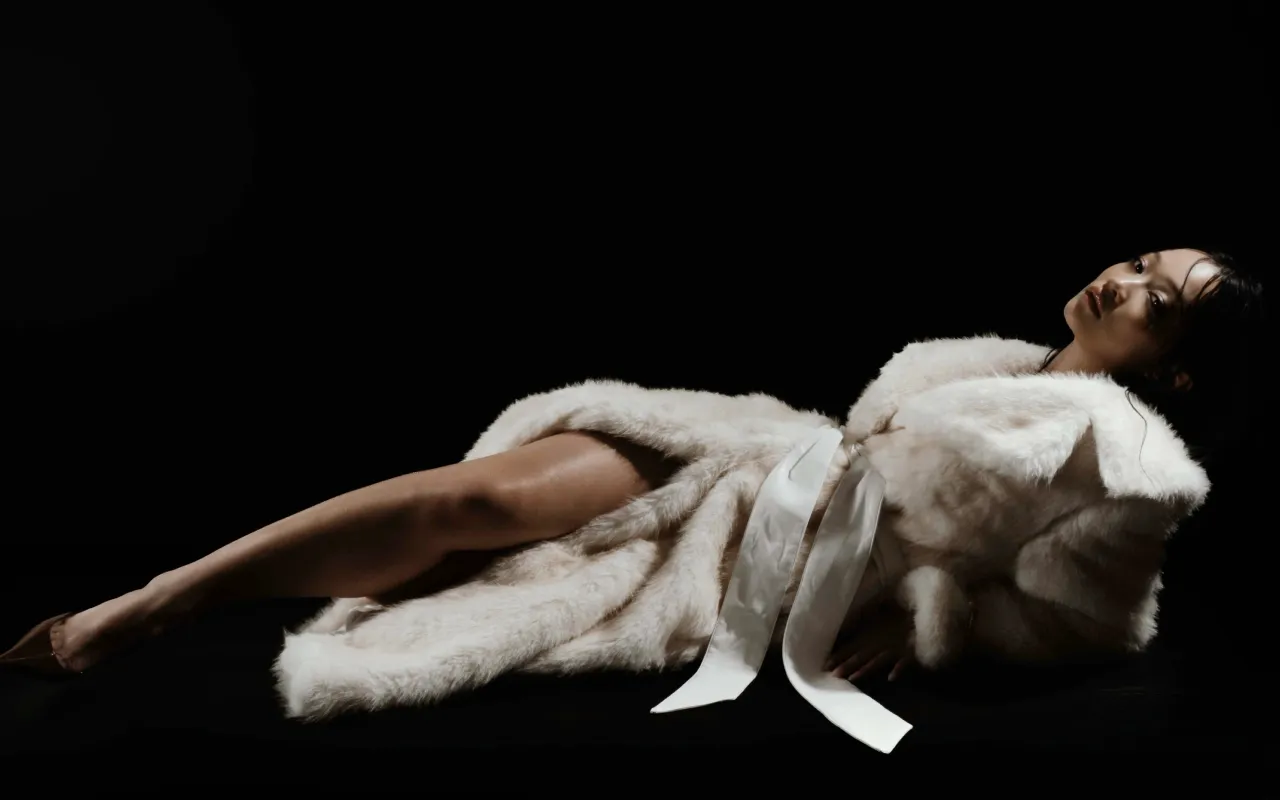
The ivory coat provides the most immediately luxurious image. Callina Liang’s plush cream outerwear look features an enormous shawl collar, rounded sleeves and a wide satin-like sash tied around the waist. The soft, fur-like surface extends across her lap as she sits against a black background, while the long ribbon falls in loose folds between her legs. The outfit’s appeal is concentrated almost entirely in its volume and texture. There is very little visible underneath, and that simplicity suits the dramatic proportions.
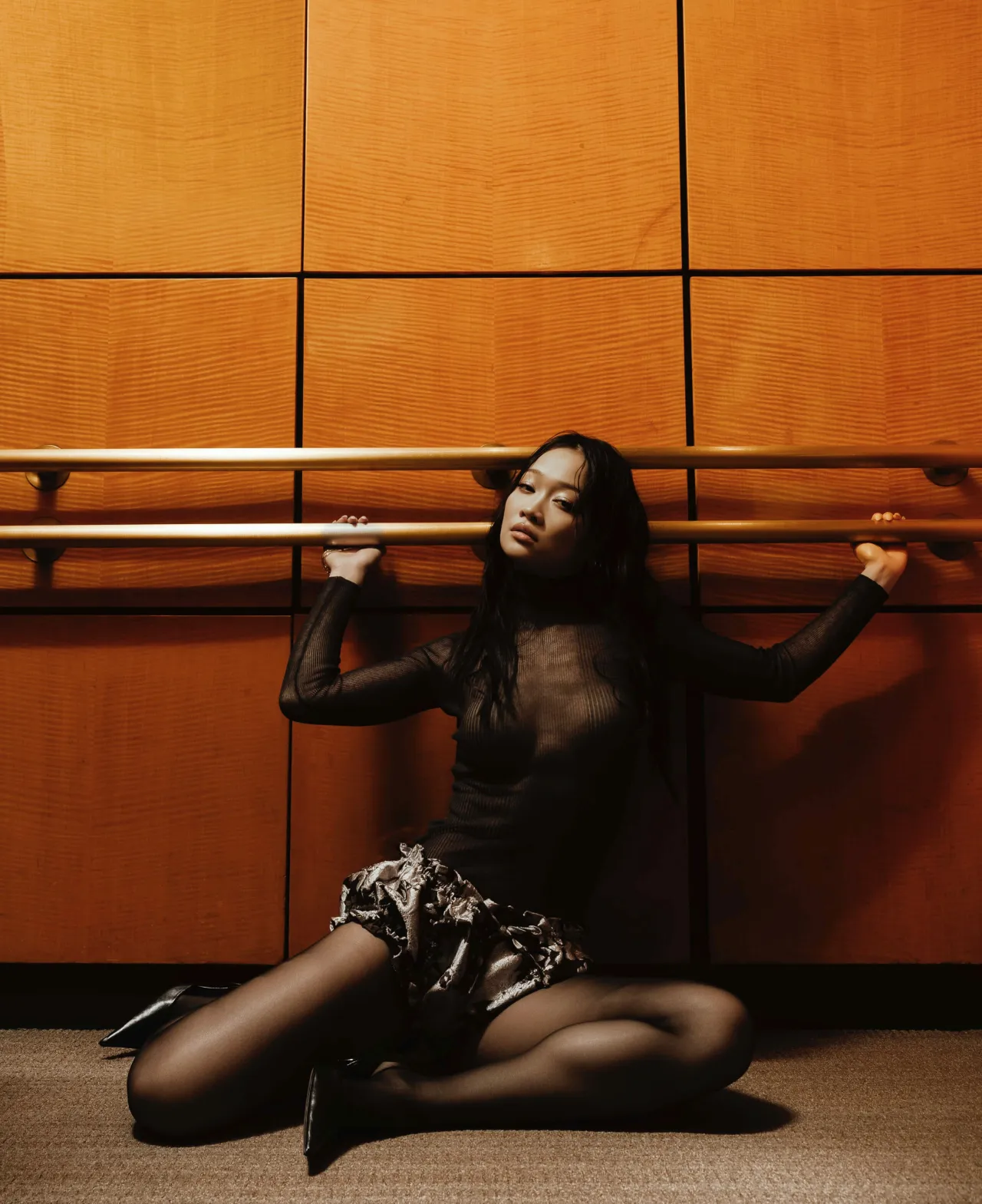
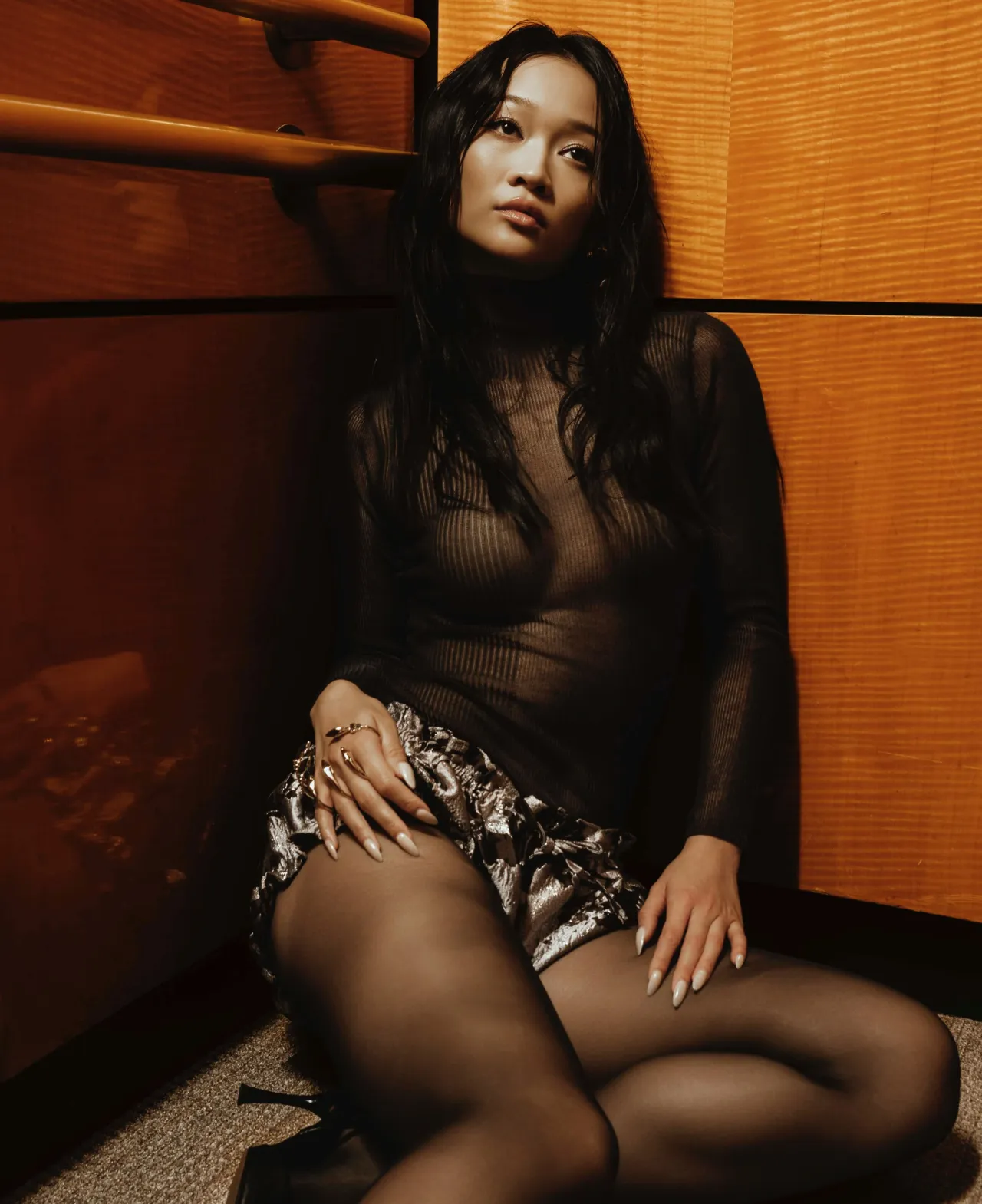
The sheer black ensemble is more provocative in construction. Against warm wood paneling and horizontal metal rails, Liang wears a fitted, semi-transparent long-sleeved top with a high neckline. Metallic-looking, irregularly gathered shorts introduce a crumpled surface at the hips, accompanied by sheer black tights and pointed heels. The contrast between the thin upper layer and the heavily textured shorts is compelling, although the bunching around the waist makes the silhouette somewhat uneven.
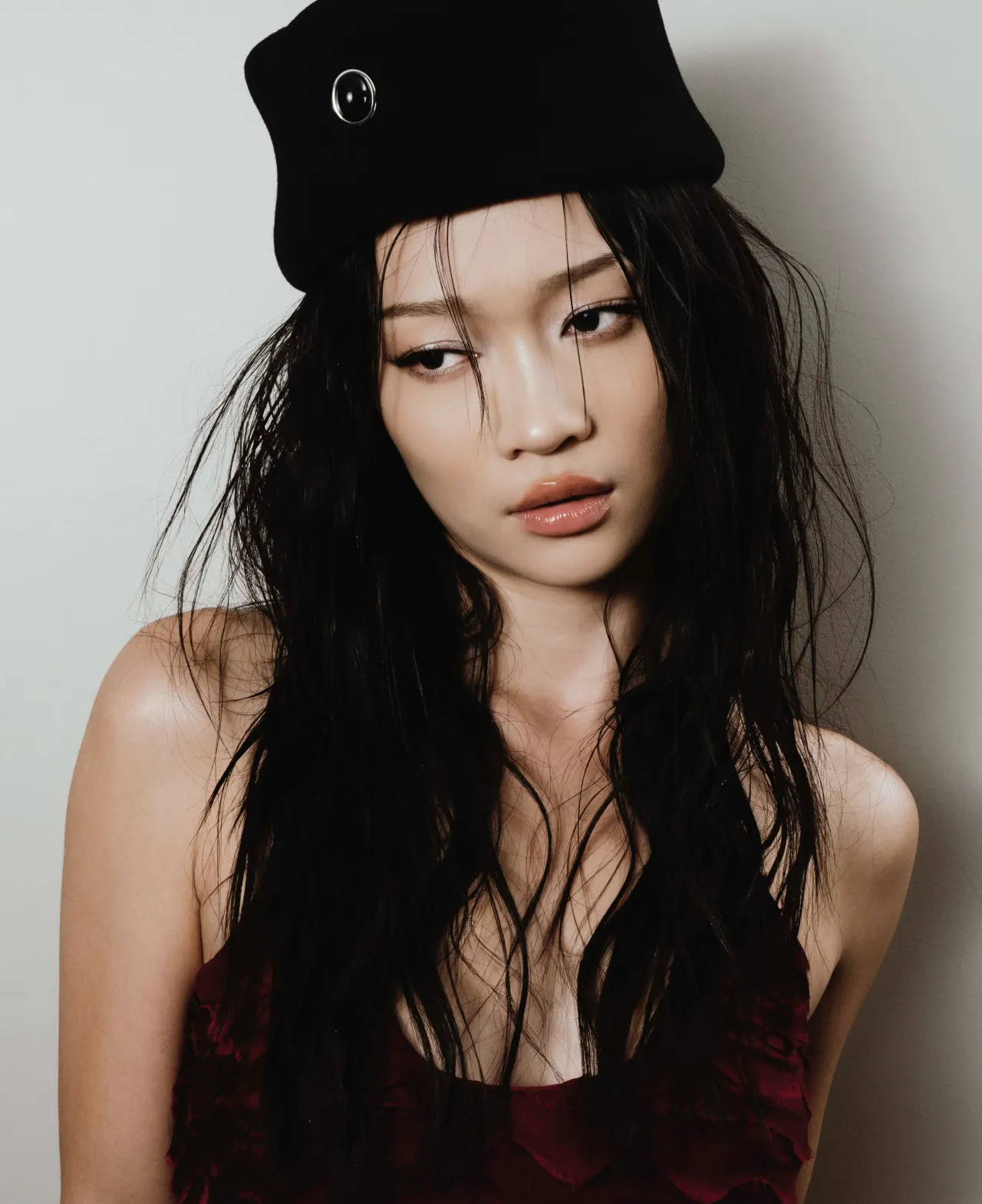
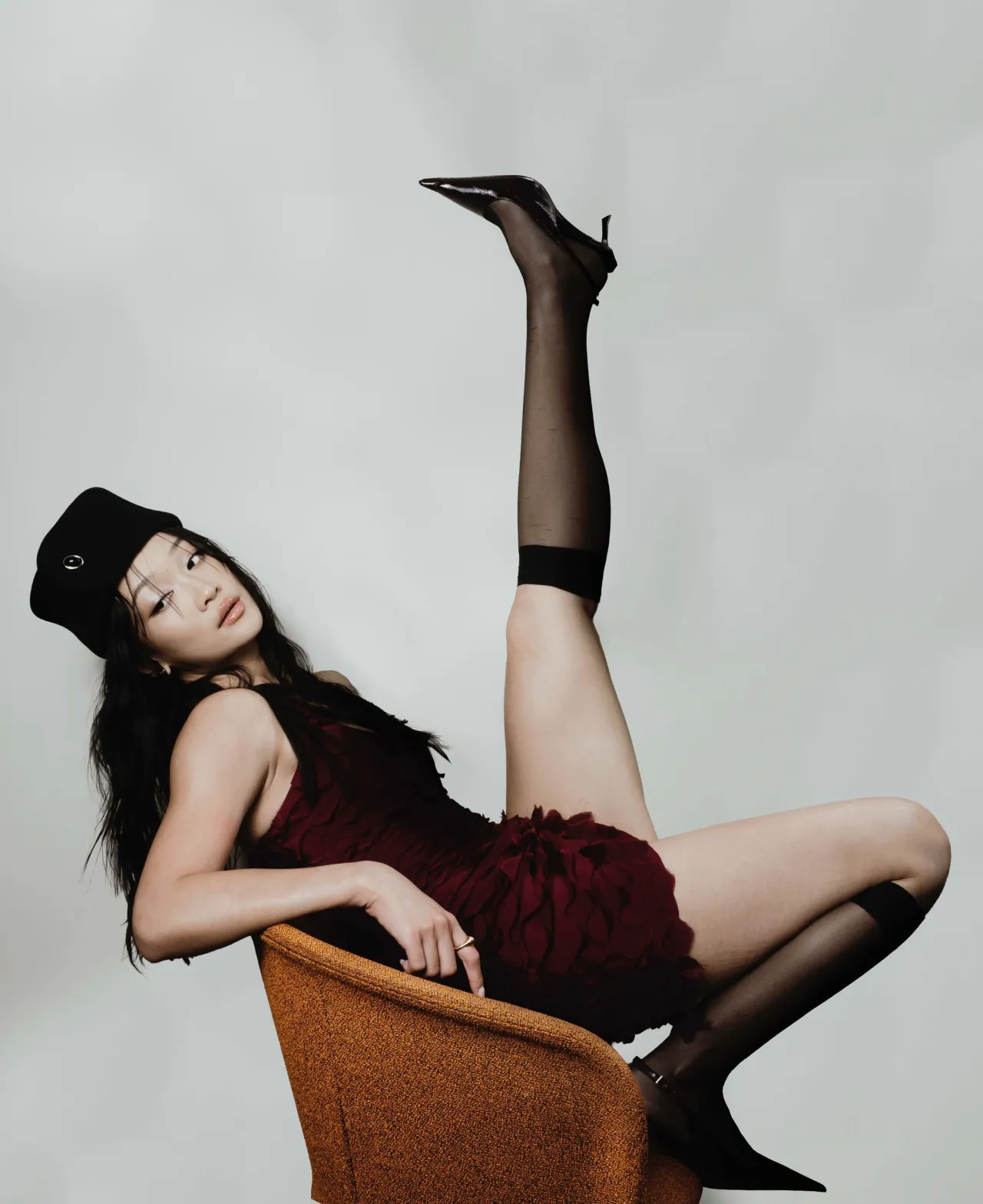
A burgundy mini dress introduces another kind of surface treatment. Its deep red fabric is covered with small, dimensional ruffles, while a black military-style cap and dark knee-high stockings establish a more graphic finish. Reclining in a rust-colored chair with one leg extended upward, Liang reveals the sharp points of her black slingback heels. The combination has a playful, slightly rebellious quality, but the sculptural pose is more memorable than the dress’s relatively familiar fitted shape.
The black-and-white tweed outfit is arguably the strongest fashion proposition in the series. Its densely speckled surface extends across a high funnel collar, broad shoulders and dramatically overlapping front panels. Fringed edges trace diagonal lines across the torso, with the garment’s angular layers standing away from the body. Unlike the ivory coat, whose shape is defined by softness, this piece derives its character from visibly firmer construction. Against the nearly black backdrop, the pale threads reveal every edge and fold.
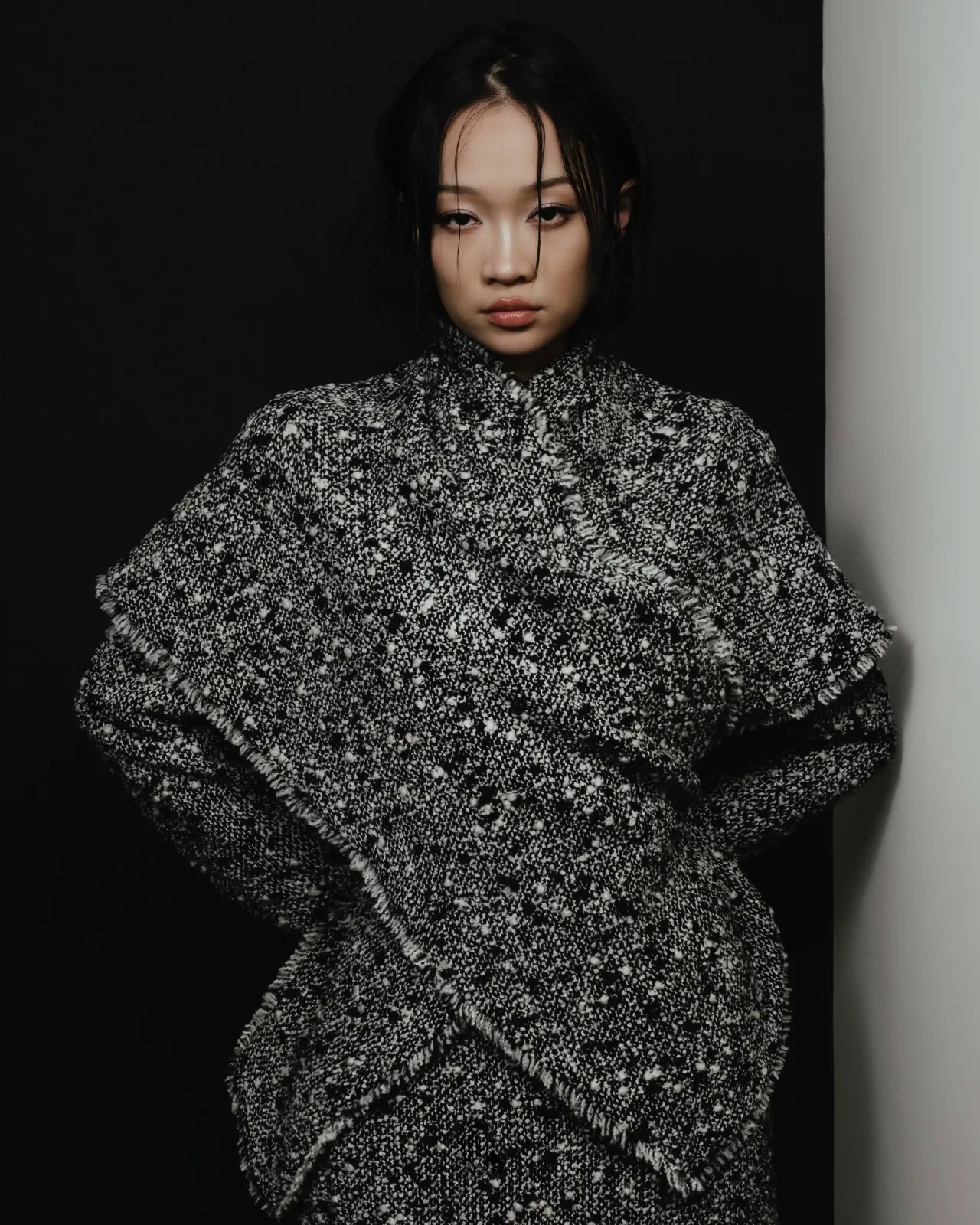
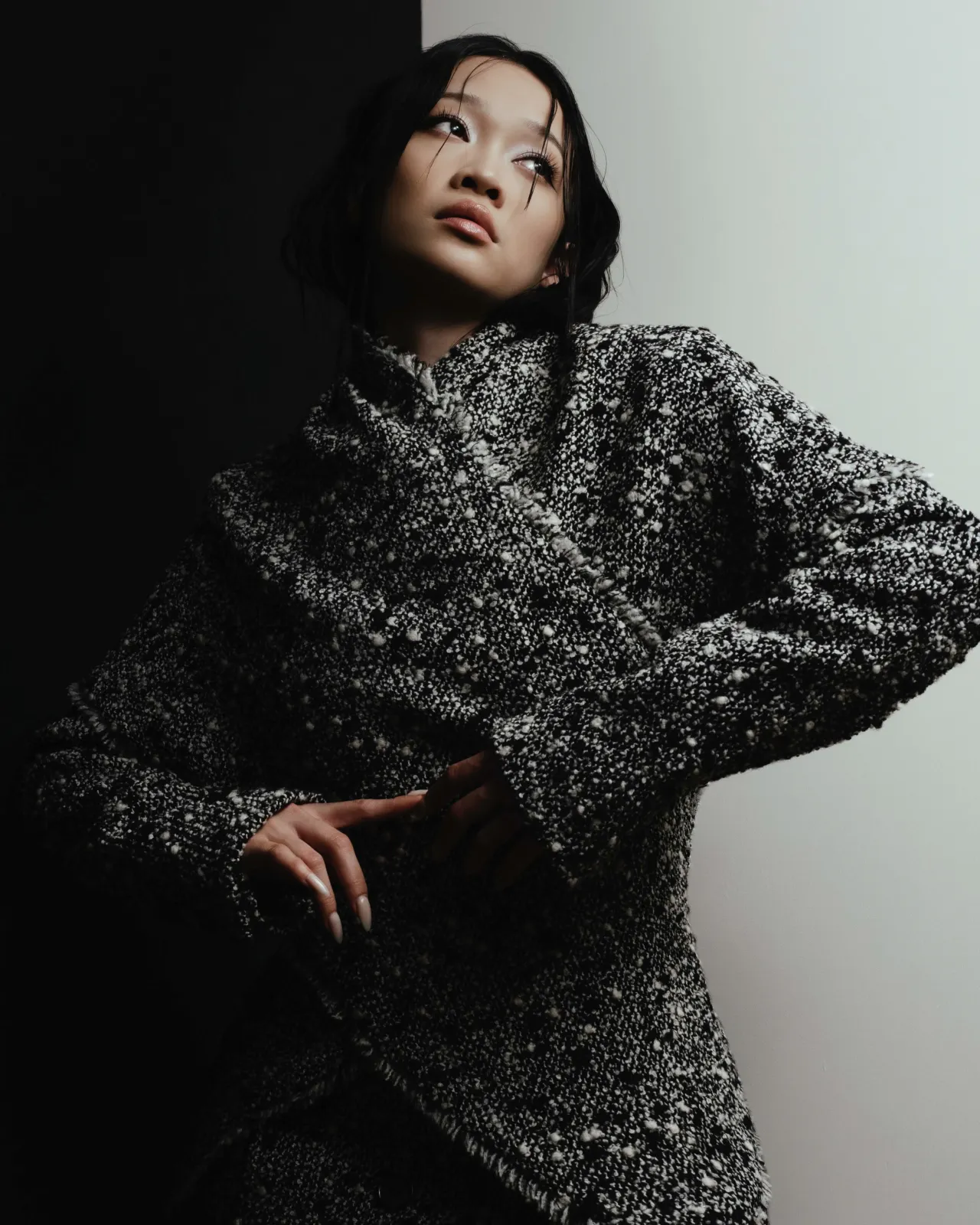
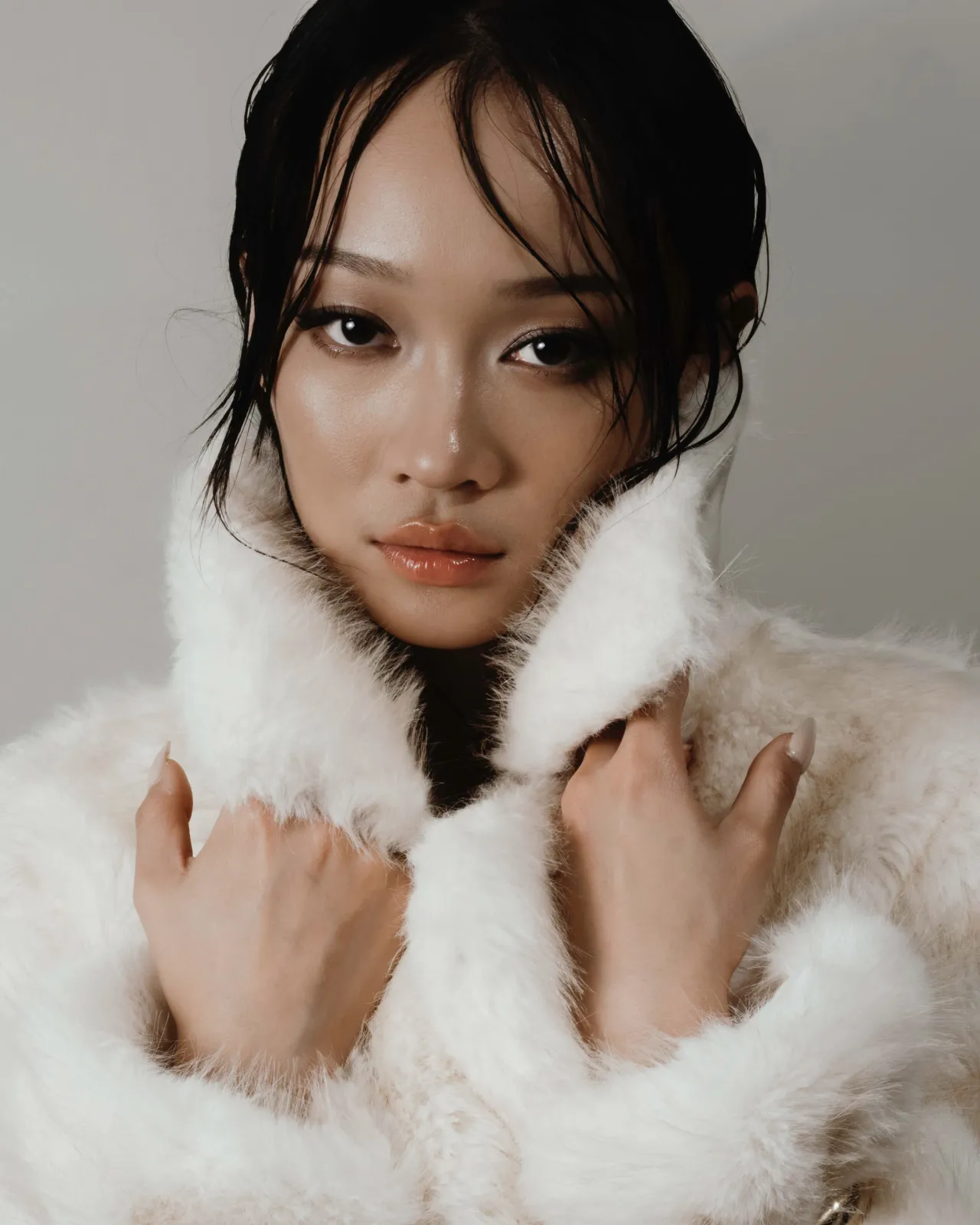
These contrasting approaches also explain the appeal of studio fashion portraits built around distinctive outerwear and textured clothing. Frey’s compositions give each look a different setting without overwhelming the garments: black space for the plush coat, warm architectural lines for the sheer ensemble, a pale background for burgundy ruffles and stark contrast for the tweed.
The editorial is most persuasive when the clothes themselves provide the visual drama. The ivory coat and sculptural tweed have particularly strong individual identities, while the burgundy look depends more heavily on pose and accessories. Liang’s tmrw Magazine fashion series earns 8/10 for its distinctive treatment of texture and the successful contrast between soft volume and structured silhouettes.




Share what you think