
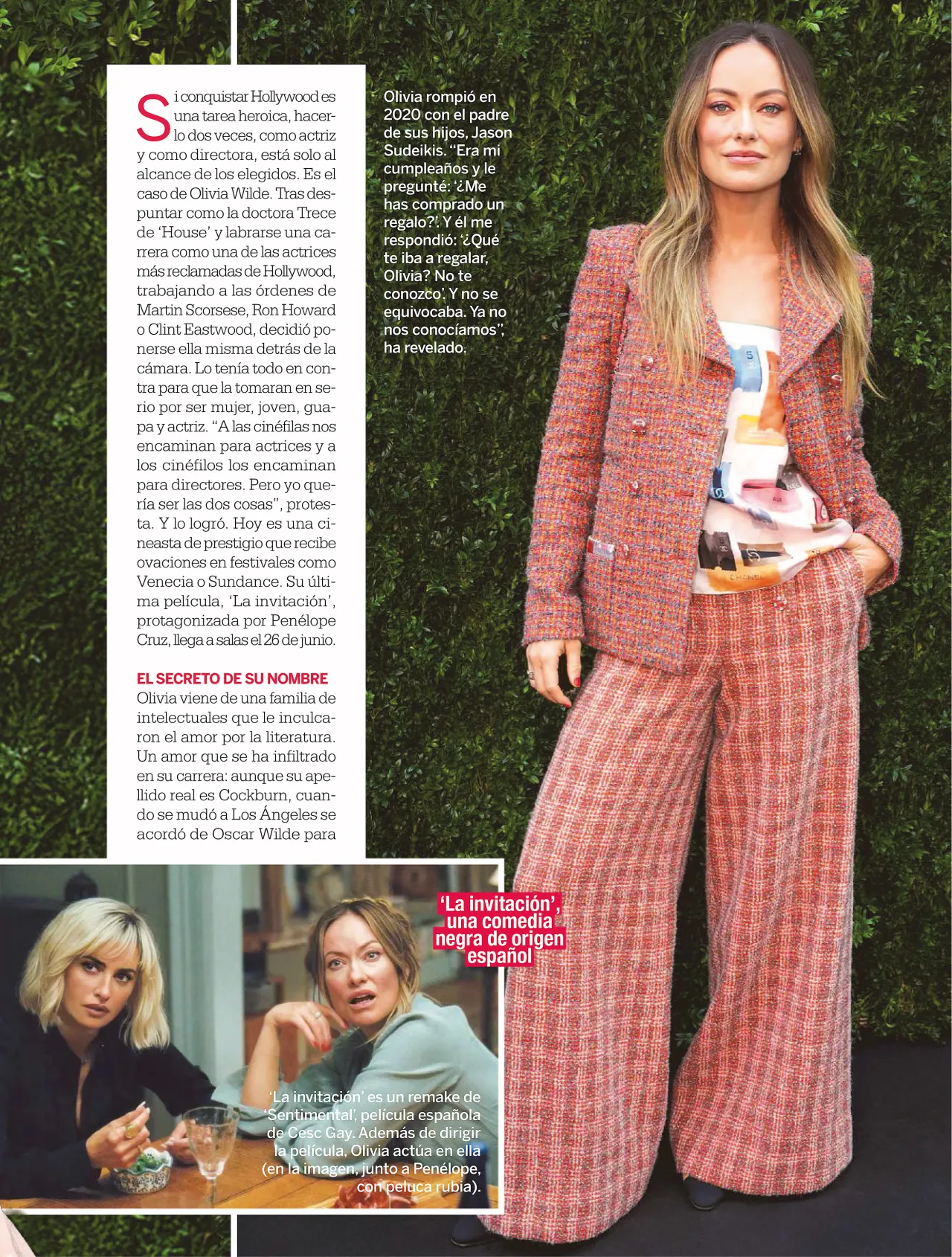
Olivia Wilde explores three contrasting looks for Lecturas Spain, from colorful tweed tailoring to delicate sheer embroidery, alongside reflections on acting, directing and Hollywood.
Olivia Wilde appears in the July 1, 2026 issue of Spanish magazine Lecturas in three distinctly different outfits, with colorful tailoring, polished knitwear and romantic sheer embroidery accompanying a feature about her career as an actress and director. The wardrobe moves between sharp and relaxed silhouettes, although the reddish-pink tweed suit is the standout. Its lively texture and generously cut trousers have considerably more personality than a conventional interview portrait requires.
The suit combines a structured, textured blazer with matching wide-leg trousers in a mixture of coral, pink, orange and muted purple tones. The jacket has pronounced shoulders, notched lapels, small front pockets and metallic-looking buttons. Beneath it, a light-colored graphic top introduces an unexpected casual element, with multicolored printed shapes interrupting the suit’s rich surface. The broad trousers fall almost to the ground, covering much of her dark footwear. In Olivia Wilde’s colorful tweed suit, the relaxed trouser proportions are particularly successful, although the busy graphic top competes slightly with the jacket’s already substantial texture.
A second portrait takes a more restrained approach. Wilde wears a white textured knit sweater with a broad black collar, a contrasting black button placket and decorative square gold-toned buttons. Loose dark trousers continue the uncomplicated silhouette, while her red manicure provides a small color accent. The black-and-white combination is classic and neatly coordinated, but its appeal is relatively modest compared with the textured suit.
The most romantic outfit appears in the magazine’s opening portrait, where Wilde wears a pale blush gown with translucent fabric, delicate floral embroidery and softly gathered details around the shoulders and neckline. Fine embroidered flowers are scattered across the sheer sleeves and upper bodice. Her long highlighted hair falls loosely down her back, complementing the garment’s delicate character. Unlike the tailored outfits, this portrait concentrates on softness and surface decoration rather than pronounced structure. The close framing leaves much of the gown’s lower silhouette outside the composition.
The accompanying profile examines Wilde’s determination to work on both sides of the camera. After establishing herself through television roles including The O.C. and House, and films directed by Martin Scorsese, Ron Howard and Clint Eastwood, she moved into directing with Booksmart and Don’t Worry Darling. She discusses the different expectations placed on actresses and female directors, including the pressure to establish authority on film sets. Her ambition was not simply to exchange acting for directing, but to pursue both disciplines.
Her third directorial feature, La invitación, is another major subject of the interview. The film, starring Penélope Cruz, is presented as an adaptation of the Spanish comedy Sentimental by Cesc Gay. Wilde also reflects on the intense public attention surrounding her personal relationships, including her separation from Jason Sudeikis and her relationship with Harry Styles, while emphasizing the importance of her children and her continuing professional ambitions.
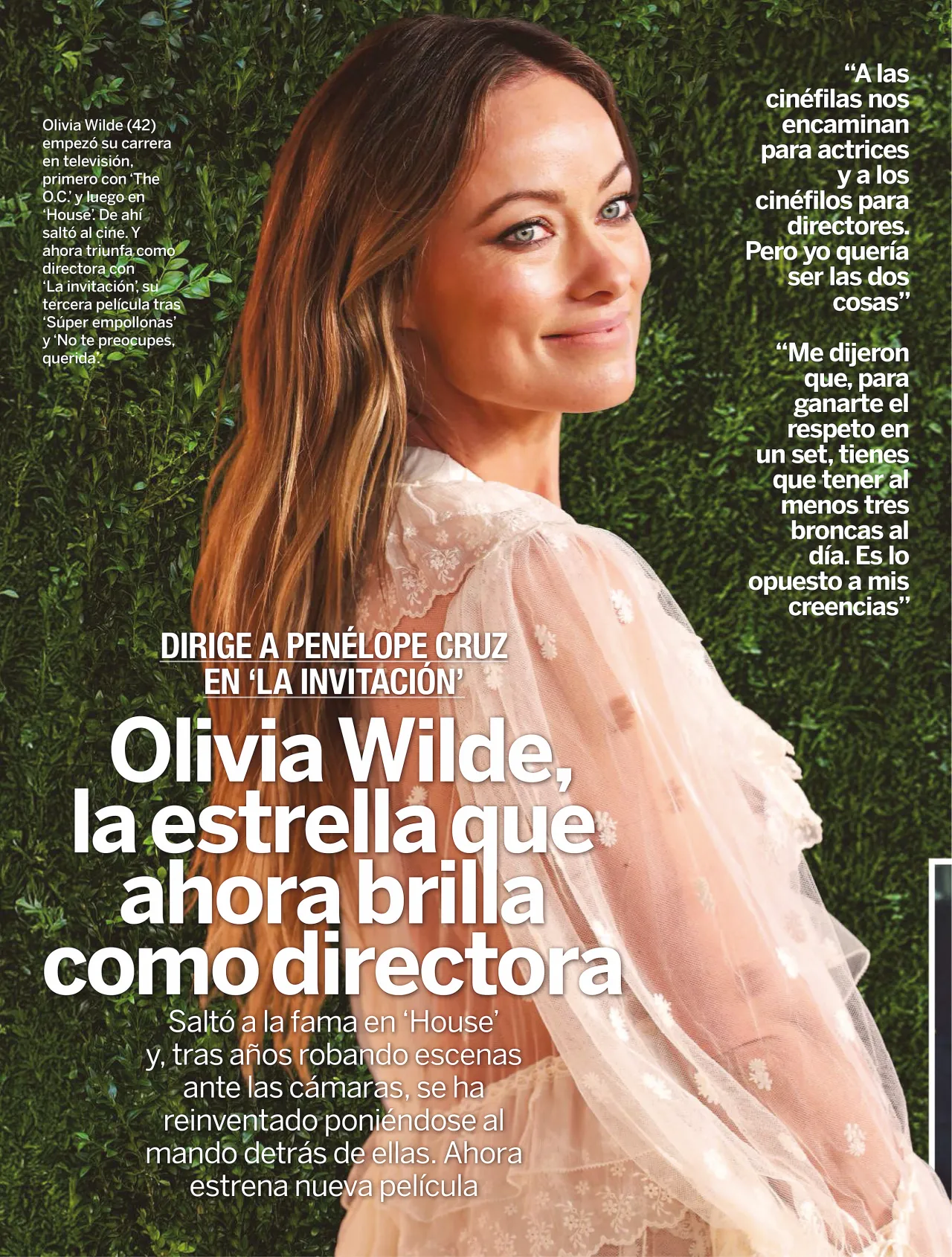
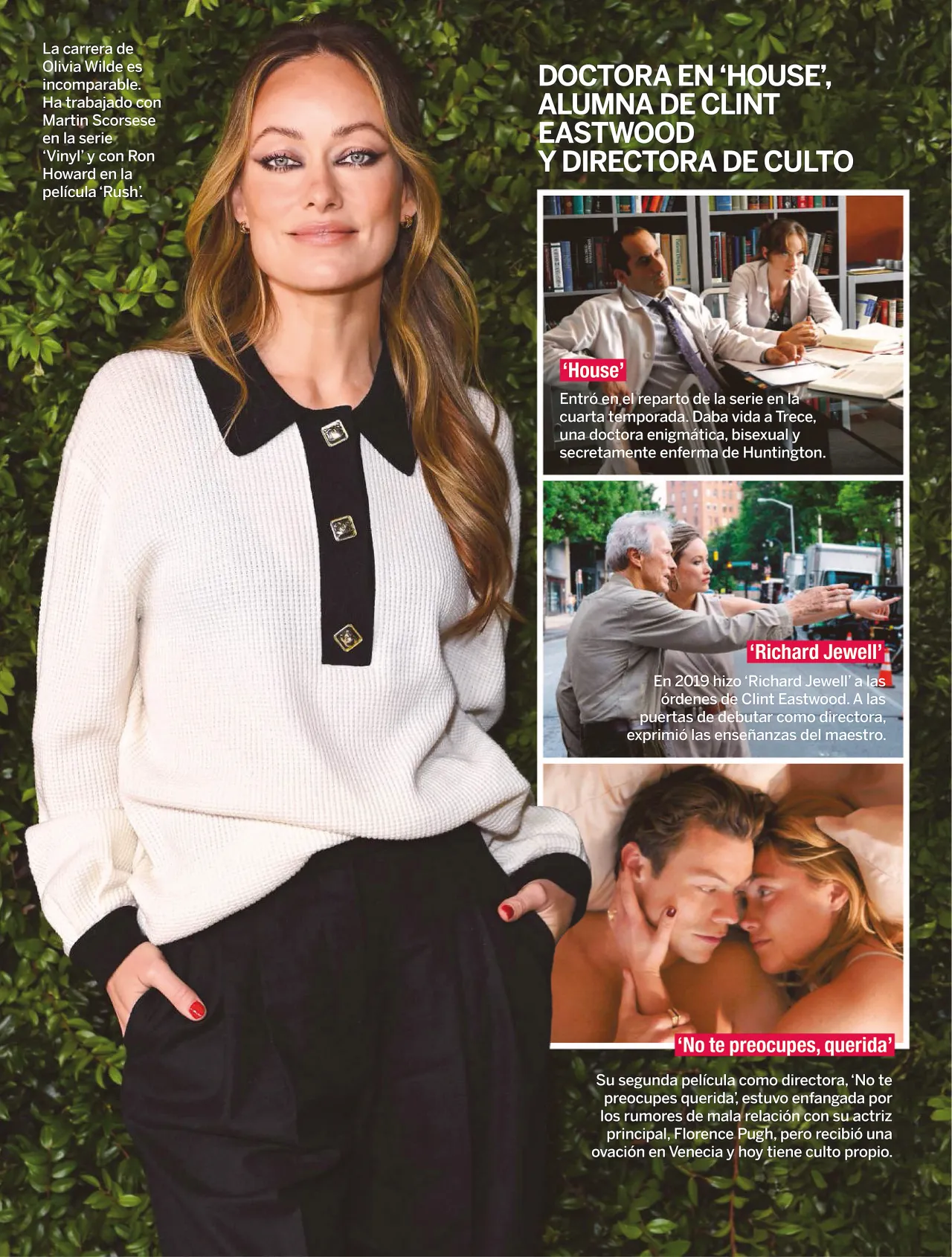
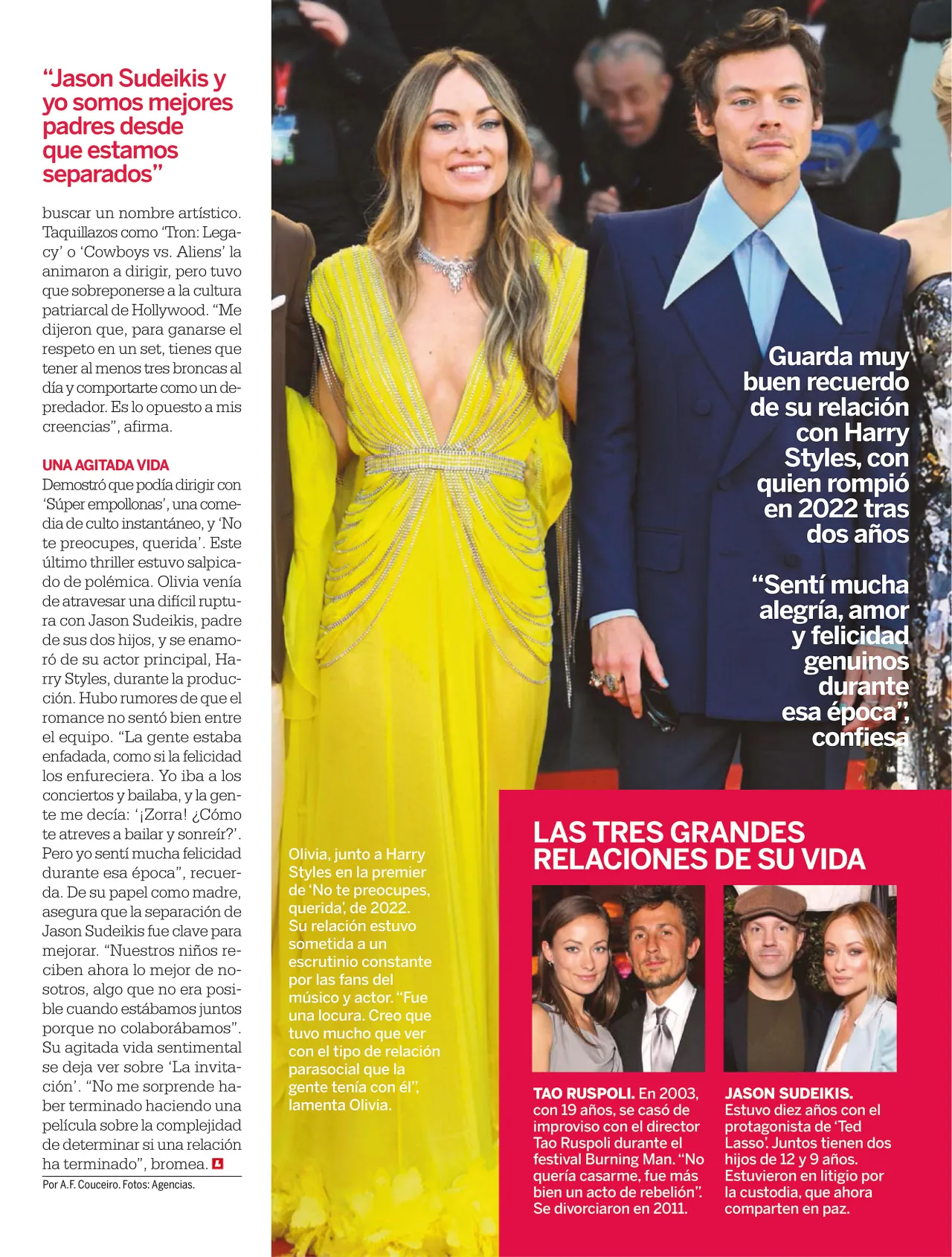
The Lecturas fashion portraits accompany that broader portrait of a performer increasingly associated with directing. The three clothing choices are different in character: the tweed suit is colorful and assertive, the white sweater is straightforward, and the embroidered gown is softer and more decorative. The contrast suits a feature concerned with the different professional roles Wilde has occupied, without requiring the outfits themselves to carry a symbolic meaning.
The tweed ensemble is the strongest fashion moment, particularly for its confident trouser proportions and lively surface. The sheer gown offers an attractive romantic counterpoint, while the knitwear portrait is polished but comparatively ordinary. Together, the images form a varied editorial wardrobe, with the tailoring providing its most memorable styling.




Share what you think