
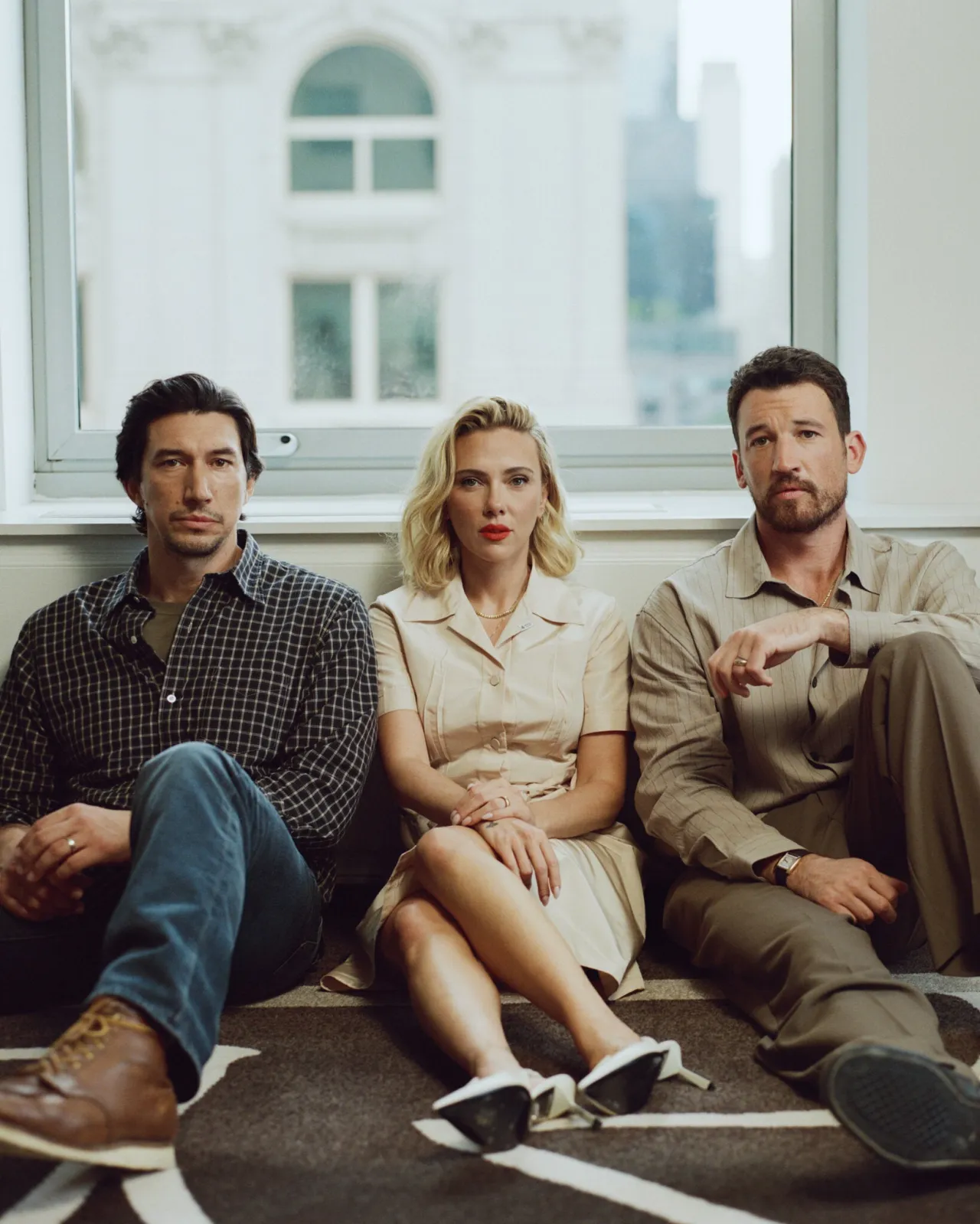
Scarlett Johansson wears a cream button-front shirt dress for The New York Times, pairing understated tailoring with black-and-white slingback heels and a striking red lip.
Scarlett Johansson sits between Adam Driver and Miles Teller in a November 2026 portrait for The New York Times, dressed in a cream shirt dress that looks almost deliberately ordinary beside her vivid red lipstick and sharply contrasting shoes. The three actors, featured together in connection with James Gray’s Paper Tiger, wear understated separates in muted tones. Johansson’s outfit occupies the middle ground between casual tailoring and feminine polish, with the accessories supplying much of its character.
The appeal of Scarlett Johansson’s cream shirt dress lies in its uncomplicated construction. A pointed collar, short sleeves and button-front bodice give the pale dress a familiar, almost utilitarian quality. The fabric follows the waist before relaxing into a softly gathered skirt, with a narrow belt-like detail visible near the middle. The shape is modest and slightly retro, without the exaggerated proportions or decorative finishes that often distinguish editorial fashion.
Her shoes are a more interesting proposition. White pointed-toe slingbacks feature contrasting black toe sections and dark soles, their sharply defined color blocking particularly noticeable against her crossed legs. A delicate gold-toned necklace and rings accompany the dress, while softly waved blonde hair and saturated red lipstick introduce a distinctly vintage-inspired beauty treatment. The combination has an appealing sense of precision, especially in the relationship between the neat collar, polished shoes and carefully defined lip color.
The portrait’s composition is equally important. Driver wears a dark checked shirt with blue jeans and brown shoes, while Teller appears in a pale striped shirt and neutral trousers. Their relaxed clothing shares Johansson’s muted palette, but her red lipstick and two-tone heels establish the strongest contrast within the group. Rather than separating the actors through elaborate styling, the portrait uses their different interpretations of everyday dressing to create visual distinction.

It is an interesting example of celebrity editorial photography built around understated personal styling. The window behind the trio, their seated arrangement and the restrained wardrobe establish a quiet, informal atmosphere. Johansson’s outfit is not particularly adventurous on its own, and the dress has limited individual design interest. Yet the shoes and beauty styling introduce enough character to distinguish her within an otherwise subdued composition.
The result is a convincing editorial portrait rather than an ambitious fashion statement. Its charm comes from the contrast between an exceptionally simple dress and the more expressive finishing details, with Johansson’s red lipstick and two-tone heels doing the most memorable work.




Share what you think